
Dead ash, dead oaks, dead leaners
Gone gray and brittle. Coming down in pieces.
A dead tree does not get safer by waiting. Up in Hampton that is usually an ash the borer finished off, or one of the old fencerow oaks that dropped its leaves one fall and never grew them back. Dead wood snaps where live wood bends, so we lean on the lift and the rigging instead of trusting a climber’s weight to it. Chris looks first and tells you straight whether it is dead or just dormant, and the stump can go on the same visit.
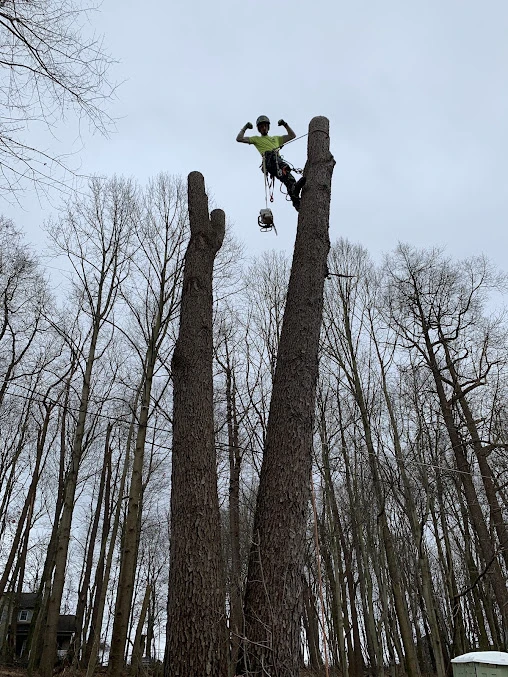

Why nobody ties into a dead limb
Live wood is wet and stringy. Load a live limb and it bends, creaks, and usually gives you some kind of warning before it goes. A tree that has stood dead for a couple of seasons has dried out from the inside, and that same limb can snap clean with no sound at all. That one difference changes the whole job.
So the climb line never goes over a dead limb. It goes around the trunk or a sound neighbor, or the climber stays off the tree and works from the lift instead. Pieces come off smaller than they would on a healthy tree, because brittle wood breaks where it wants to rather than where the cut says, and a short piece is easier to steer. More lowering lines, less free dropping, especially near a roof or a fence.
Dead ash is the worst of the bunch. Once the borer is done with it, ash dries out fast, turns brittle, and handles worse every year it stands. If yours died early in the decade, sooner beats later. There are finished removals of every size in the gallery.
Dead, or only dormant? Reading it in January
A lot of these calls come in over the winter, because a bare tree looks dead whether it is or not. Before anybody books a removal on a tree that might leaf out in May, there are three plain checks you can do yourself.
Scratch a twig. Pick a thin one at the end of a branch and scrape it with your thumbnail. Green or moist underneath means that twig is alive. Brown and dry means it is not, so try a few more from different sides of the crown before you decide anything.
Look at the bark. Bark that falls off in sheets, or that you can peel away with your fingers, has lost its grip on the tree. On ash you will often see long vertical splits and patches where woodpeckers stripped the bark going after the larvae.
Look for brackets. Shelf-shaped fungus on the trunk or around the base means rot is already inside, sometimes in a tree that still leafs out fine every spring.
When the checks disagree, wait for leaf-out before cutting. A tree that was only sleeping is worth a few months. Our dead tree removal page goes deeper on the general method.
Where it stands decides the gear
Same dead tree, four different setups. The spot changes the plan more than the species does.
- Open lawn
- With clear grass on at least one side, the top comes off in pieces and the trunk drops in short sections into the opening. The quickest version of the job, and the grapple loader carries the wood out so nothing gets dragged across the yard.
- Over the roof or the garage
- Every piece gets lowered on a line. Nothing is dropped. Dead limbs over shingles tend to come down on a calm afternoon for no reason you can see, which is exactly why they go first.
- On the old fencerow
- The dead oaks along the old farm lines are some of the biggest wood we handle up here, with heavy sideways limbs from a lifetime of growing in the open. Those come apart from the outside in, limb by limb, before anyone touches the trunk.
- Near the street
- Someone stays on the ground watching cars and anybody walking by while wood comes down, and the cut pieces go straight to the loader instead of piling up at the curb.
The leaner on the ravine edge
Where Crouse Run and North Fork Pine Creek cut down through the township, the back of a lot can drop off steep into woods that stay wet long after the rain quits. A dead tree on that slope has two problems at once. The wood is brittle, and the ground holding it goes soft every spring.
When a dead tree on a ravine edge leans toward the slope, or back toward a yard above it, that is the one we tell people not to wait on. It has no live roots putting down fresh grip, and a soaked bank can let it tip over with the whole root plate attached.
On those jobs everything is roped. We decide where each piece lands before the first cut, lower the wood instead of pitching it down the hill, and pick the loader’s path so the bank is not rutted and washing out all summer. Sometimes the trunk is better left lying in the woods below than dragged back up. That call is yours to make.
A live tree on a wet slope can hang on. A dead one stopped trying a while ago.
The stump, and the trees still standing around it
A dead tree leaves a stump, and an old fencerow tree leaves a wide one. If you want it gone, the grinder rides along on the same visit and takes it below grade, then follows the surface roots out far enough that you can seed the spot. Mention it when you call so the machine is already on the trailer.
While Chris is on the lot he will usually point out a few other things. A live tree that grew up beside the dead one is about to take wind it never had to handle alone, and crown thinning can take some of that load off. A plan tree splitting into two or three stems may be a candidate for tree cabling. Wood that wind or ice already broke is storm-damaged tree removal, and a back corner that has filled in with rose and locust is brush clearing. The rest of what we do up Route 8 is on the Hampton Township page.
Hampton Township, a run north on Route 8 and on the regular Allegheny County route.
Questions before a dead tree comes down
What people ask Chris while standing under a bare crown.
How do I know my tree is dead and not just dormant?
Scratch a thin twig with your thumbnail. Green underneath means alive. Check twigs on several sides, look for bark peeling off in sheets, and look for shelf fungus on the trunk or around the base. If the signs disagree in winter, wait for spring leaf-out before anybody cuts.
Why is a dead tree harder to take down than a live one?
Dried-out wood snaps instead of bending, often with no warning crack. So nobody ties into a dead limb, the pieces come off smaller, and more of them get lowered on ropes instead of dropped. It takes more rigging and more care, and we plan the job around that from the start.
My ash died a few years ago. Is it still safe to leave it?
Not for long. Ash killed by the emerald ash borer dries out and turns brittle faster than most dead trees, and it gets harder to take down safely the longer it stands. If it can reach the house, a driveway or a play set, put it near the top of the list.
There’s a dead tree leaning over the ravine behind my house. What happens?
Chris looks at the lean, the bank and what sits below it. On the slopes along Crouse Run and North Fork Pine Creek we rope every piece down, decide where the wood lands before cutting, and choose the loader route so the hillside is not rutted. Dead leaners on soaked banks go first.
Can you grind the stump the same day?
Usually, yes. Tell us when you call so the grinder comes on the trailer. We take it below grade and follow the surface roots out far enough that you can seed the spot and run a mower over it later without the deck hitting anything. Big fencerow stumps included.
Will you tell me if the tree is not actually dead?
Yes, out loud, before anything gets cut. A bare tree in February can be perfectly healthy, and a tree with leaves can be rotten at the base. Chris tells you what he sees and why. If it can stay, it stays, and you hear that from us first.
Is it bare, or is it gone?
Take one photo of the whole tree from far enough back to see the top, then a close one of the bark at eye level and any fungus near the ground. From those two, Chris can usually tell whether you have a dead-tree job or a wait-until-May job, and what it will take to get it down. If it leans toward the house or the ravine, say that first and it moves up the list. You get an up-front number in writing before anybody climbs or the lift goes up. The contact form takes photos, or pick up the phone.