
Before anybody starts a saw
Arborist services and tree risk answers, Pittsburgh
Sometimes the job is not cutting. It’s somebody who has climbed these trees for twenty-five years walking your property, reading what the tree is actually doing, and telling you straight whether it stays or goes. Chris does the looking. You get it in writing.
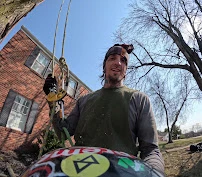
What a real risk evaluation looks at
A risk evaluation is four questions asked in order. What would this tree hit if it failed? Where is the load going? Is anything holding it back that shouldn’t be? And how fast is that changing? Most people only ask the first one, usually while standing under the tree pointing at the roof.
Targets come first, because a leaning tree over an empty back corner is a different conversation than the same lean over a driveway your kids walk down. Then the lean itself: whether it’s the tree’s natural habit from reaching for light, or a new movement that pulled soil up on the opposite side. A cracked, heaving root plate is one of the few things that means act now, and it’s easy to miss under mulch.
Decay is where trained eyes earn their keep. Fungal conks at the base, a hollow note when you sound the trunk with a mallet, seams and included bark where two leaders meet: those tell you how much sound wood is still carrying the load. A silver maple with a tight V union at chest height and a bark seam running down from it has a known failure mode, and it usually happens in a wet spring wind rather than a dramatic storm.
The last question is rate of change, and it is the one homeowners are best positioned to answer. A crack that has been there since you bought the house in 2011 is a different animal from one that opened last August. Old wounds that have rolled callus wood around the edges are trees defending themselves successfully. Fresh splits with clean, wet faces have not had time to do anything. That is why the walk-around includes questions about your tree’s history, and why photos from previous years are genuinely useful if you have them on your phone.
Second opinions, and the trees we talk people out of removing
A fair number of the calls that come in start with somebody else’s recommendation to take a tree down. Sometimes that recommendation is right and we say so. Plenty of times it isn’t. A pin oak dropping leaves early is often chlorotic from Pittsburgh’s alkaline fill soil rather than dying, and that’s a soil problem with a soil answer. A big maple with a couple of dead limbs in the crown may need a careful pruning cycle and nothing more.
We do not get paid more for telling you your tree is fine, and that’s exactly why the answer is worth something. If your tree can be saved and you want it saved, we’ll lay out what that takes. If it’s genuinely dangerous, you’ll hear that in plain words with the reasons attached, and you’ll get an up-front number for the work either way.
Identification is the first step in any of that, because the care plan follows the species. A tree that needs its structure corrected while it’s young gets a different schedule than one that only needs deadwood cleared every few years. Some species will not tolerate heavy summer cuts. Others heal fine but resent having their root zone compacted by a patio project. Knowing which tree you own tells you what it can take, and it tells you what the next twenty years look like if nobody touches it at all.
What we are, plainly
Twenty-five years in the trade, fully insured, and EHAP certified for work near energized lines. Military discount for those who served.
We are not an ISA Certified Arborist firm. If your situation needs a stamped ISA report for a lawsuit or a municipal appeal, we will tell you that on the phone and point you toward someone who can issue one.
See our work in the gallery, or read up on tree health care and cabling and bracing, which is where a lot of these assessments end up.
“Chris was very responsive and transparent with the work scope and price. Work was executed according to the defined scope.”
Matthew Salac, Google reviewHow an assessment runs, start to paper
Nobody needs a consultation about a consultation. Here is the actual split.
Your part
Tell us what prompted the call. A home inspector flagged something. A neighbor’s tree is over your fence. A limb came down and you want to know if more is coming. Send a photo if you have one, then let us on the property.
If a buyer, agent, or insurance adjuster needs the written version, say so at the start so we document it that way the first time.
Our part
Walk the whole tree, not just the side you can see from the porch. Sound the trunk, check the root plate, look at the union geometry, read the crown for dieback pattern and species. Photograph what matters. Then explain it standing right there, in words you can repeat to your spouse.
You get a written summary of what we found, what it means, and what we would do about it, with the number to do it. If the honest answer is leave it alone, that’s what the paper says. Storm damage gets looked at same day.
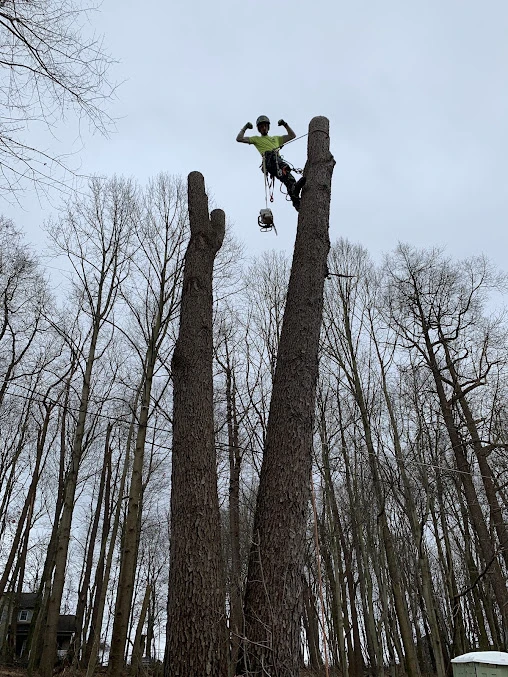
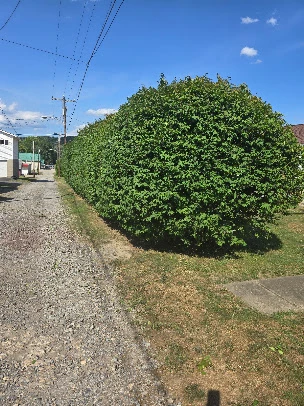
Our crew on Allegheny County properties. Some assessments end in a climb, most end in a conversation.
Twenty-five years of reading Western Pennsylvania trees
Species knowledge is regional, and Pittsburgh has its own cast. Silver maples fail at codominant unions. Pin oaks yellow out in disturbed alkaline soil and get misdiagnosed as dying every spring. Norway spruces planted as property lines in the sixties shed their lower thirds and go top-heavy. Ash that survived the borer wave is brittle in ways a healthy ash never was. Somebody who learned trees in Florida or Texas is guessing at all of that.
The river-terrace neighborhoods make it more specific still. Along Oakmont the older lots carry mature street trees squeezed between sidewalk and curb, so root zones are compromised long before the crown shows it. Tight lots in Edgewood put big canopies over two houses at once, which changes what counts as an acceptable risk. Down in Aspinwall the flatter ground near the river holds spring water and loosens root plates on the largest trees first.
Then there are the wires. Pittsburgh’s back-lot service drops run straight through canopies all over the county, and anything within ten feet of an energized line is not a homeowner or general-landscaper job. Chris is EHAP certified, the tree industry’s Electrical Hazard Awareness Program, which means the crew is trained specifically on line clearance hazards, approach distances, and when to stop and call the utility instead of improvising. If your assessment involves a conductor, that training is the whole reason the answer you get is trustworthy.
What people ask about assessments
The honest versions, including the ones where the answer is no.
Are you an ISA Certified Arborist?
No, and we will not claim otherwise. Triple T brings twenty-five years of hands-on trade experience, full insurance, and EHAP certification for electrical hazard work. That covers the vast majority of homeowner tree questions. If you need a stamped report from an ISA Certified Arborist for a legal dispute, a municipal appeal, or a court filing, tell us and we will point you to someone who can issue one instead of wasting your time.
My home inspection flagged a tree. Can you write something up?
Yes, and this is one of our most common calls. We walk the tree, document the condition with photos, and give you a written assessment of what the inspector saw, whether it’s actually a defect, and what work if any resolves it, with the cost to do that work. Buyers, sellers, and agents can all read it. Tell us the closing date and we’ll work to it.
Another company told me the tree has to come down. Will you look?
Gladly. Bring us the reasoning they gave you and we’ll check it against what the tree shows. We have agreed with plenty of those calls and we have also saved trees that were one signature from the chipper. Either way you get the reasons behind the verdict, not only the verdict itself.
What does EHAP certification actually mean for my job?
EHAP is the Electrical Hazard Awareness Program, the tree industry’s training standard for working around energized conductors. It means approach distances, hazard recognition, and utility coordination are things we were trained on, not things we figured out. In practice: if your tree touches a service drop or grows into a primary line, we know which cuts are ours to make and which ones require the power company on site first.
Can you tell over the phone or from a photo?
We can often tell you whether it’s urgent, and that’s worth a call before you do anything else. But decay, root-plate movement, and union defects hide from cameras. A real evaluation happens on the ground, with hands on the trunk. That visit is quick and it costs you nothing to have Chris walk it.
If the tree needs work, do I have to hire you for it?
No. The assessment stands on its own and you’re free to take it anywhere. Most people do hire us, because by then they’ve watched us look at their tree and heard us explain it. But nobody gets pressured. Set up the walk-around and decide afterward.
Get an answer you can actually act on
One walk-around with Chris, one honest read on your tree, one written summary with the number attached. Whether that ends in a removal, a cable, a pruning plan, or leaving a healthy tree alone, you’ll know why. In sawdust we trust.