
After the machine leaves
Stump hole filling that stays level
Every stump leaves a crater behind it. Fill it right and nobody ever knows a tree stood there. Fill it wrong and the lawn reminds you every spring, one dimple at a time, until you’re standing over the same sunken spot with a wheelbarrow for the fourth year running.

Why the hole sinks, and why it keeps sinking
Here’s the part nobody explains at the end of a stump job. A ground stump leaves a pile of chips and a hole. The easy move is to rake the chips back in, walk away, and call it finished. It looks perfect that afternoon. The problem is that wood chips are not soil. They’re organic matter with air between every piece, and they spend the next several years doing what wood does underground, which is rot, shrink, and compress. As that mass breaks down, the ground above it drops. You get a saucer. Then you fill the saucer with a bag of topsoil and get a shallower saucer the following year.
That slow collapse is why a chip-backfilled hole needs topping off for seasons on end, and why so many people think stump work is just something that never quite looks right. It isn’t the grinding that failed. It’s the fill. Wood that goes in the ground has to finish decomposing before the ground stops moving, and around here that can run five to ten years depending on species and how wet the spot stays. Oak and locust chips hang on the longest. Poplar and pine give up faster but still take their time.
The fix is unglamorous and it works: get the decomposing material out of the void, put mineral soil in its place, and compact it in layers instead of dumping it in one shot. Loose soil poured into a deep hole holds air the same way chips do. It settles too, just faster and with less drama. Packing it in lifts is what makes the difference between a repair that disappears and one that introduces itself every March.
Structural fill, topsoil cap, and knowing which one you need
Not every hole gets the same recipe, and this is where the walk-around earns its keep. If grass is the only thing going back on that spot, we bring in clean fill, place it in six-inch lifts, compact each layer, and stop about four inches short so a real topsoil cap goes on top. Turf roots live in that top few inches. Give them compacted subsoil to grow in and you’ll fight thin grass forever, no matter how good the seed was.
If something is being built over the spot, the spec changes entirely. A patio, a shed pad, a driveway apron, or a footing needs material that compacts hard and stays put under load, usually crushed stone brought in and packed in tighter lifts with a plate compactor. Topsoil under a slab is a future crack. When there’s a contractor in the picture, Chris would rather spend two minutes on the phone with them getting the base spec right than hand off a hole that has to be dug out again.
Grade is the other half. We crown the finished fill slightly above the surrounding lawn, because settlement is coming no matter how well the compaction went, and a small mound that flattens out beats a divot that deepens. Match it dead flush on day one and you’ve built a birdbath by August. Go too heavy on the crown and the mower scalps it, leaving you a brown circle every time the grass gets cut. There’s a narrow window between those two and hitting it is the whole craft of this work. Twenty five years in the trade is mostly a long education in how much a given soil will drop.
What comes with the truck
Clean fill and topsoil hauled in, a plate compactor for the lifts, rakes and a grading pass, plus seed and straw or sod cut to the patch when the lawn work is part of it.
Fully insured, and a military discount for those who served.
See finished ground in the gallery, or read what happens before this step on the stump grinding and stump removal pages.
“Fantastic service! Would highly recommend! Very prompt and professional and did a great job cleaning up.”
Jamie Forrester, Google reviewFilling a hole, split two ways
Yours is short. Ours is the part that decides whether the ground behaves in three years.
Your part
Tell us what’s going on that spot. Lawn, flower bed, patio, shed, or nothing at all. That one answer changes the material we haul in, so it’s worth thinking about before the walk-around instead of after.
Then water the seed if we seeded, and stay off the patch for a few weeks. That’s the list.
Our part
Clear the chip debris and loose punk wood out of the void so there’s nothing left to rot. Bring in the right fill for the load. Place it in lifts, compacting each one rather than dumping and hoping. Crown it for the settling that’s still coming, blend the edges into the existing grade so the mower runs clean over it, then seed and straw or lay sod.
We come back and look at it if it drops more than we told you it would. Say the word and Chris is on the property.
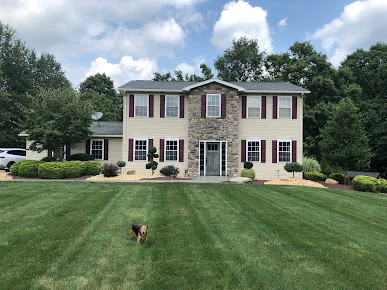
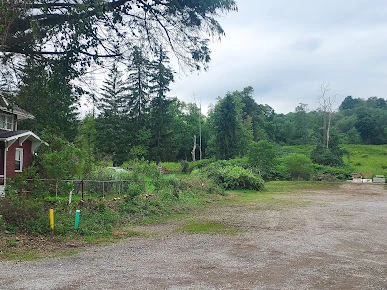
Left: turf grade restored over a filled hole. Right: compacted stone base on a lot where the fill had to carry weight. Our jobs, our photos.
Old sunken spots from somebody else’s tree
A good share of this work has nothing to do with a tree we took down. Somebody buys a house, mows it a few times, and finds two or three soft depressions in the yard where a previous owner had trees taken out years ago. Sometimes there’s a ring of half-rotted chips under the sod. Sometimes it’s just a low spot that holds water after every storm and grows moss instead of grass. Either way the repair is the same idea run backwards: open it up, pull out whatever is still breaking down, refill in compacted lifts, and rebuild the grade so water sheds off it the way the rest of the lawn does.
Around Glenshaw and Allison Park, where a lot of the housing stock has had mature trees come and go over fifty years, we regrade several of these in a season. The heavy clay in this part of Allegheny County makes it more noticeable, because clay holds water in a depression instead of letting it drain, so a two-inch dip turns into a permanent wet patch and then a mud patch. Up in Hampton Township the bigger lots often have a handful of old holes at once, and doing them in one visit costs less per spot than calling us back three times. If you’ve got a dip you’ve been filling with a bag of dirt every spring, that’s the tell. The wood is still down there.
Fill and settling questions
What people ask standing over a hole in their yard.
How much will the fill settle after you leave?
On a properly compacted clean-fill patch, an inch or less over the first year, which is why we crown it slightly to begin with. If a hole was backfilled with chips before we got there, expect several inches over several years, and that’s the reason we pull that material out rather than pack around it.
Can’t I just fill it with the wood chips from the grinding?
You can, and plenty of people do, because it’s free and it looks fine that day. Just know the trade you’re making. Those chips rot and shrink, so the spot will dimple and you’ll be topping it off for years. If the area is mulch bed or a back corner nobody looks at, that’s a perfectly reasonable choice. If it’s front lawn, bring in soil.
When can I seed or lay sod over a fresh fill?
Seed goes down the same day on the topsoil cap. Germination wants soil temperature and steady moisture, so early fall is the best window in this climate, spring is second, and mid-summer seed usually needs babysitting with a hose. Sod can go down immediately and gives you a lawn that afternoon, though it still needs the same compaction underneath or it will sink as a unit.
Why does my mower scalp the spot where the tree was?
The fill was left proud of the surrounding grade, or it settled unevenly and left a high shoulder on one side. The deck rides the high point and cuts the grass to dirt. It’s a grading fix, not a mowing fix. We shave the crown down and feather the edges out three or four feet so the transition is gradual enough that the mower never notices it.
Do you fill holes from stumps another company took out?
Regularly. Half these calls are old craters from removals done years ago by somebody else, or by a previous owner. We don’t need to have ground the stump to fix what’s left. Send a photo of the depression and we’ll tell you whether it needs a full dig-out and refill or just a regrade with fresh soil.
What does stump hole filling run in Pittsburgh?
It rides on how deep and wide the void is, how much material has to be hauled in, whether the fill is carrying a structure, and whether lawn restoration is part of it. Nobody should quote that sight unseen. Chris looks at the hole, measures it, and puts what it’ll cost in writing before anything gets hauled. Set up a visit and you’ll have that up-front number quickly.
Make the hole disappear for good
One visit, the right material, packed the way it should be, graded so the lawn closes over it and forgets. One and done. In sawdust we trust.