
The first two hours
Storm just passed and nothing works. Start here.
The wind quit twenty minutes ago and your driveway is under a maple, the front walk is impassable, and something heavy is resting on the edge of your roof. This page is about that window: the make-safe run that gets cars out, gets people through the door, and takes the load off whatever is carrying it. Not the pretty version. The version that lets tomorrow happen.
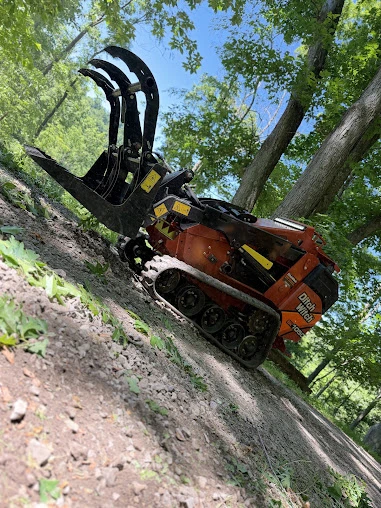
Triage, not restoration
There is a real difference between making a property safe and making it whole, and the honest thing to do is name it before we roll a truck. A night crew working under headlamps and truck spots can see roughly a thirty-foot bubble. Inside that bubble we can cut, rig, and haul as well as we can at noon. Outside it we cannot read a canopy, cannot spot a cracked union forty feet up, and cannot tell a rotten stub from a solid one. So we do not pretend. Night work is make-safe work. We take the pieces that are stopping your life or threatening to fall on somebody, and we leave the rest flagged for daylight.
That sounds like a limitation. It is the only responsible way to run these calls. A guy who insists he can do a complete cleanup in the dark is either lying or has not done enough of them yet. Chris has 25 years behind him, and the ones he remembers are the ones where somebody rushed a cut they could not see the far end of.
What actually gets opened first
The list is short and it barely changes from call to call. The driveway comes first, because a blocked driveway means nobody leaves in the morning, nobody gets to a dialysis appointment, and nobody gets out if something else goes wrong overnight. We cut a lane wide enough for a vehicle, drag or grapple the wood clear of the pavement, and stack it on the lawn where it will sit until the finish crew comes for it.
The front walk and porch are next. If the mail carrier cannot reach the door, neither can a paramedic. We clear a path, not a landscape.
Then the structure. If a trunk or a big leader is sitting on the roof edge, we take weight off it in small pieces from the far end, working so the roof is never asked to hold a swinging load. Often we are not trying to remove the tree at all that night. We are trying to get enough of it off the eave that a tarp will sit flat and the water stops coming in. A roofer can tarp a clear edge in twenty minutes. Nobody can tarp under a limb.
Blocked street access is the one people do not think to mention on the phone, and it is often the most urgent item on the whole property. If a tree from your yard is lying across the road, no fire truck, no ambulance, and no utility bucket reaches your block or the six houses past it. That gets cut and cleared to the curb whether or not it is technically the item you called about.
Notice what is not on that list. Raking. Chipping the whole pile. Grinding a stump. Taking down the cracked tree that is standing there looking terrible but is not currently falling on anything. All of that is real work and all of it is coming, just not at one in the morning by flashlight. A night crew that starts tidying is billing you for motion.
Flagging what waits for light
Everything we cannot safely evaluate in the dark gets flagged instead of guessed at. Hangers still hooked in the canopy get marked and the ground under them gets taped off, so nobody walks a dog under a limb that has not decided yet. A trunk with a seam we can feel but cannot follow up its length gets a note and a photo. A leaning tree that is not currently threatening anything gets left alone until we can read the root plate in daylight.
The morning after a storm is when people relax, and it is also when a limb that survived the wind finally lets go onto somebody standing in the driveway drinking coffee. We walk you around the marks before we pull out, so you know which parts of your own property to stay out of until we are back.
Then you get the honest scope line before we leave, out loud and in writing: here is what we made safe tonight, here is what is still up there, here is when we come back. The full property cleanup, the hauling, the raking, and the trees that need to come out entirely all live on the storm damage cleanup side of this, and that visit happens with the sun up and a full crew. Two trips, on purpose. One to make it safe, one to make it gone.
Loaded for a night run
Grapple loader for moving trunk wood without a dozen people on a rope. Chipper when the pile is in the way of the lane. Rigging for anything with stored energy in it. Scene lighting so nobody is cutting toward a shadow.
Insured, military discount for those who served.
If the tree is on the house right now or touching a wire, that is emergency tree service. Say the word emergency on the phone and we sort it from there.
“Christopher and his crew arrived on time, worked safely and efficiently, and handled the entire process with real professionalism.”
Felicia Provenzano, Google reviewSequencing a county-wide blow
When one front hits everybody at once, the order we take calls in is not first-come. Here is the rule we actually use.
How we rank the list
Life safety first. A tree on an occupied room, a wire in the mix, a hazard over a road where cars are still moving. Those jump everything, including callers who phoned an hour earlier.
Access second. Blocked driveways, blocked streets, a porch nobody can reach. Anything that traps people or keeps emergency vehicles out.
Property third. Wood on a fence, a limb on a shed, a yard full of brush. Real damage, but it will look the same at nine in the morning as it does at two.
What that means for your call
You get told where you sit, plainly. If you are third-tier on a night when half of Allegheny County is calling, we say so instead of stringing you along with a window we already know we will miss.
Chris takes the triage questions himself: what is it touching, is anybody under it, can you get a car out. Thirty seconds on the phone usually decides whether we are coming tonight or first thing.
And if a neighbor’s situation is genuinely worse than yours, you will hear that too. Reach us here if the situation changes while you are waiting, because it sometimes does.

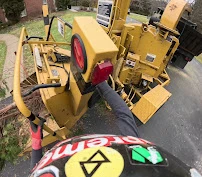
Our own crew, our own trucks. The brush on the right is going through the chipper because it was sitting in the lane, not because the yard was getting finished that night.
Narrow streets change the whole plan
Getting to you is half the job around here, and it is the half nobody outside the trade thinks about. Kilbuck Township is hillside and hairpin, and a downed tree partway up one of those grades can seal off a whole stretch of houses with no way around. We stage lower and work uphill on those, because a loaded truck on a wet slope with a chipper behind it is its own hazard.
In Reserve Township the lots run steep and short, so a tree that fails uphill lands on the roof of the house below rather than in anybody’s yard. That is a make-safe call almost every time, since the weight is on a structure from the first minute. And Sharpsburg has the tight old borough grid: mature street trees, parked cars on both sides, and no room to swing a boom. Half of what we do there overnight is get enough wood off the pavement that the block can function again by morning.
Knowing those roads is why we can give you a real arrival window at midnight. We know which grades a truck cannot climb wet, which turns a chipper will not make, and which streets are already going to be blocked at the other end.
Asked at midnight
Questions that come up while the crew is still loading the truck.
My driveway is blocked but nothing hit the house. Is that worth a night call?
Usually yes, and people write it off too fast. If a car cannot get out, you have no way to leave in a hurry and nobody can get to you quickly either. Opening a lane is fast work, often under an hour, and it costs less than most people expect because we are cutting a path rather than clearing a property.
Why can’t you just finish the whole thing tonight?
Because we can only see about thirty feet, and a storm-hit tree hides its worst problems above that. Reading a canopy for hangers and cracked unions takes daylight, and cutting wood you cannot fully see is how crews get hurt. We take what is dangerous or in the way now and come back with the sun for the rest.
Can you get the tree off my roof so a tarp will hold?
That is one of the most common reasons we roll at night. We take weight off the eave in small controlled pieces so the roof never carries a swinging load, and we clear enough of the edge that a tarp can lie flat and seal. Full removal of that tree usually waits for daylight, but the water stops that night.
A tree from my yard is across the street. Whose problem is that?
Yours to call in, and it is genuinely urgent regardless of ownership questions. A blocked road means no ambulance and no fire truck for your block. We cut it and clear it to the curb so the street opens, and we sort out the paperwork side afterward. If a wire is anywhere in it, call the utility first and then us.
How do you decide who gets a crew first after a big storm?
Life safety, then access, then property. Anything on an occupied structure or involving wires goes first. Blocked driveways and blocked roads go second. Wood on a fence or a pile in the yard waits, even if that caller phoned earlier. We tell you which tier you are in rather than giving you a window we know we cannot hit.
What does the night visit cost compared to the daylight one?
They are two separate pieces of work with two separate prices, and you hear both. The make-safe run is quoted on what it takes to open access and take the weight off, and after-hours work carries a different rate than a scheduled Tuesday. The daylight finish gets its own written figure once Chris can walk the property. Get in touch and you will have a straight answer, not a range that moves later.
If the driveway is blocked right now, call
One call gets Chris on the phone and the truck loaded. One trip makes it safe, one trip makes it gone, and you know which is which before we leave. Photos from finished jobs are in the gallery when the sun comes up. In sawdust we trust.