
Where nobody walks the back forty
The trees you can’t see from your kitchen window
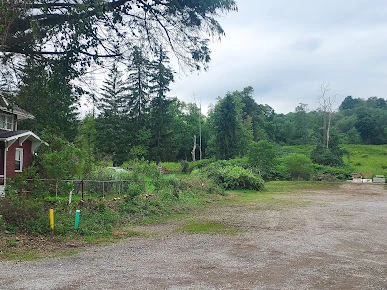
Indiana Township is deep-lot country. Houses sit two hundred, four hundred, sometimes a thousand feet off the township road, and the ground behind them keeps going. That layout produces a specific kind of tree problem: the failures happen where nobody is looking. Nothing goes wrong in the front yard you mow every Saturday. It goes wrong along the back tree line, at the edge of the pond, halfway down the drive, in the corner of the property you last set foot in the year you bought the place.
So we walk it with you. Chris has 25 years in the trade and he covers the whole parcel, not the one tree you called about. Insured, military discount, and one mobilization that clears the entire list instead of four trucks over four seasons.
What we do in Indiana Township
Every service on the truck runs here weekly. The links go deep on each one.
Removal
Large tree removal · Tree removal · 24/7 emergency response · Storm damage cleanup
Care
Tree pruning · Tree trimming · Cabling · Bracing
Health
Tree health · Disease treatment · Arborist services
Groundwork
Land clearing · Lot clearing · Brush clearing · Forestry mulching · Stump grinding · Stump removal
Commercial
Out here the dead ash is still standing
Drive the Dorseyville corridor and look past the mailboxes. In the built-up parts of the county the emerald ash borer wave got cleaned up years ago, because a dead ash in a half-acre yard is impossible to ignore and it gets handled the first spring somebody notices. Around Dorseyville and the roads that run off it, those same trees are still up. Not because anyone decided to leave them. Because they are four hundred feet behind the house in a stand of maple and cherry, and gray bark against gray trunks in winter does not announce itself. We find them in numbers on almost every deep parcel we walk in 15051 and the wooded end of 15238.
Six or eight years dead changes what the wood will do. A fresh standing dead ash still has fiber and it comes down more or less how you plan it. One that has been dead most of a decade has gone punky at the top, the bark is off in sheets, and the limbs snap under their own weight when the trunk is bumped. That is why we take them as a sweep instead of one at a time. We flag every dead ash on the parcel in one walk, drop the whole run in one day with a crew set up for it, and you are done with that generation of trees rather than paying for a truck every time one leans a little further. It is the single most common job we put an up-front number on in this township.
The second one is the driveway. A quarter-mile gravel drive through woods is not a driveway, it is an access corridor, and it closes in from both sides a few inches a year. Owners notice when the propane truck starts refusing the turn, or the oil delivery driver loses a mirror, or a box truck backs the whole length out because it could not turn around. Clearance is a measurement, not an opinion: a working drive wants roughly fourteen feet of vertical air and the brush pulled back past the tire tracks so a wide axle has somewhere to go. We cut the low limbs, pull the encroaching growth back, and take out the leaners at the drive edge that would drop across the only way in. If a stretch has grown over badly enough that trimming is not the answer, forestry mulching grinds the understory in place and leaves a mat instead of a burn pile you would have to babysit for a week.
Ridge-and-hollow ground makes the third problem. The land here folds constantly, and where a hollow bottoms out you get wet ground that stays wet. Trees on the low side root shallow because they never had to go deep for water, and a shallow root plate in saturated soil is what turns an ordinary March gust into a windthrow. The same thing happens at pond edges, which a lot of these parcels have. A willow or a silver maple that has spent twenty years leaning out over the water is not going to correct itself. Look at the base on the uphill side after a wet week: if the soil has heaved or the mulch ring has cracked open, that tree has already started moving.
The yard line is its own conversation. On a big wooded parcel the mowed area is a clearing inside your own woods, and the trees standing at that boundary are the ones that get lopsided, because they are the only ones with open sky on one side. We thin at that line rather than clearing it. Take the dead, the leaners and the split-crotch trees for the first thirty or forty feet, leave the healthy canopy behind them, and the woods stay woods while the yard stops collecting limbs every windy week. Families near Emmerling Park have the same question about the stretch that backs up to open ground, and the answer is the same: manage the edge, not the forest.
What none of this needs is a salesman. Chris walks the property, tells you which trees are genuinely a problem and which ones are just big, and puts one number on the version of the work you actually want. Plenty of walk-arounds out here end with three trees flagged and the rest left alone. When something does have to come down, a removal here means the wood and the brush leave with us, the stump gets ground if you asked for it, and the crew is off your ground the same day. That is how we work everywhere in Allegheny County, and on parcels this size it matters more, because the alternative is a brush pile at the back of your property that sits there until you hire somebody else to deal with it.
“Absolutely fantastic work, carefully executed, highly recommend.”
John Seifert, Google reviewIndiana Township questions
What people with real acreage ask before we drive in. Finished work sits in the gallery.
How do I know if the dead trees on my back acreage are ash?
You often do not, and that is fine, because you do not have to. Ash gives itself away up close: the bark splits in a diamond pattern until it starts falling off in plates, the limbs come off the trunk directly opposite each other, and woodpeckers strip the upper trunk to a pale blond color that stands out once you know to look for it. Send a photo or let Chris walk the back of the property. He will tell you what is out there and how far gone it is in about ten minutes.
Delivery trucks keep scraping down my driveway. Can you open it up?
Yes, and it is regular work for us here. We clear the vertical air over the drive so a box truck or a propane truck clears without touching, pull the brush back off the tire tracks so a wide axle has room, and take out the drive-edge leaners that would fall across the only way in and out. On a long gravel drive we work from the road inward so nothing gets trapped behind us. Most drives take under a day.
Do you have to drive equipment across my whole yard to reach the back?
Only as far as it takes, and we plan the route before the day of the job. Chris looks at where the ground is firm, where the culverts are, and whether the wet stretch in the hollow will hold weight that week. If the ground is soft we would rather wait two dry days than cut ruts across a lawn you have to live with. Sometimes the answer is climbing and rigging the tree down and carrying brush out to a chipper parked up by the drive.
There’s a leaning tree at my pond edge. Is it going to come down on its own?
Probably eventually, and rarely in a direction anybody would pick. Trees at a water edge root shallow on the wet side and lean toward the open light over the pond, so the lean gets a little worse every year and the root plate never gets any stronger. Check the base on the uphill side after a rainy stretch. Heaved soil or a crack opening in the ground means it is already moving, and that one gets rigged down under control instead of being left to fall into the water.
What does tree work cost on a property this size?
It comes down to the tree count, how far back they sit, and whether the equipment can get to them, so nobody can give you an honest answer over the phone in thirty seconds. Send photos or book a walk-around and you will have an up-front number in writing covering the whole list, cleanup and haul-off included, before a saw starts.
Not sure what’s standing dead out back?
Call Chris and he walks the whole parcel, drive to back line. You get a straight read, the number up front, and one day that clears the list. In sawdust we trust.