
Before anybody digs
Site preparation for the project you already paid to design
A garage pad, an addition, a pole barn, a pool, a new septic field. Something is going in your yard this year, and a few trees are standing exactly where it goes. Triple T reads your plan against the trees, takes down what has to go, protects what stays, and hands the ground over open so the excavator can start the morning he shows up.
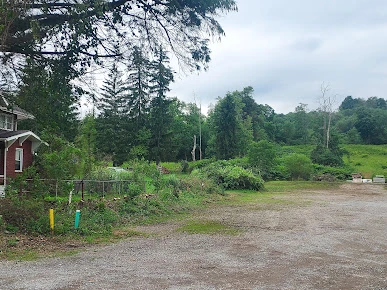
Your drawing shows the building. It doesn’t show the trees.
Almost every homeowner project starts the same way. You have a plan on paper, a permit in progress, and a contractor with a date. What you don’t have is anybody who has walked the yard and matched that rectangle on the drawing to the actual living things standing in it. Architects draw property lines and setbacks. They rarely draw the forty-year-old Norway maple whose trunk sits eleven inches inside your new garage slab.
That is the first thing we do. Chris comes out with your plan or your sketch, stakes or paces the corners of what’s going in, and tells you plainly which trees the project takes. Sometimes it’s one. Sometimes the honest answer is that you can shift the pad six feet and keep a tree you love, which we have told plenty of people and cost ourselves work saying it.
Then comes the second list, which is the one nobody expects.
The trees the footprint takes, and the trees the machine takes
A mini excavator is small. A full-size excavator on a trailer, a concrete truck, a crane setting roof trusses on a pole barn, or a septic tank on a boom is not. Whatever is coming has to get from your street to your backyard, and it has a width, a height, and a turning radius that a homeowner has never had to think about before.
So we ask what machines are coming, and then we walk the route they will take. That side-yard gap between the house and the fence line where a low silver maple limb hangs at nine feet? A concrete truck needs fourteen. The pin oak at the corner of the driveway that everybody loves? Its trunk is fine, but the low scaffold branches will scrape the cab of anything wider than a pickup. That branch gets cleared rather than the whole tree, which is exactly the kind of distinction worth making before somebody with an hourly machine makes it with a bucket.
This is the surprise on most site prep jobs. The footprint takes two trees. The access route takes a third, plus some clearance pruning on four more. Finding all of it during the walk instead of on the delivery morning is the entire reason to do this as its own step.
Fencing the roots of the trees you’re keeping
The trees that survive your project are the ones most people never worry about, and they are the ones that die two summers later. Not from being hit. From being parked on.
A mature tree’s feeder roots live in the top eighteen inches of soil and spread out roughly as far as the branches do, often farther. Run a loaded machine across that ground a dozen times and the soil compacts hard enough that water and air stop moving through it. The tree looks fine that fall, thins out the next spring, and is dead or dying by the summer after that, long after anybody connects it to the construction.
The fix is cheap and takes an hour. We set protection fencing at the drip line of every keeper tree before the heavy work starts, so there’s a physical line the excavator operator and the concrete crew can see. Inside that line, no travel, no material stacking, no washout. Where the dig has to come closer than the roots would like, we can cut the root edge clean with a saw instead of letting a bucket tear it, which the tree recovers from far better. If a keeper tree needs its canopy lifted or thinned for clearance anyway, that gets handled during the same visit as tree pruning work rather than as a second trip.
Tree first, excavator second, and why that order saves money
People sometimes ask if the excavation contractor can just knock the trees over while he’s out there. He can, and he’ll charge you machine time to do it badly. What you get is brush stacked on the site the grader has to work around, and a disposal problem on your invoice.
Worse is the version where the tree work waits until the structure is half built. Every advantage we have disappears. There’s no drop zone anymore because your new framing is in it. The chipper can’t reach the backyard because there’s a foundation between it and the street. What was a straightforward morning becomes a rigging job over a brand new roof, and the price follows the difficulty.
Doing it in the right order is just cheaper. We clear and grub, they cut and grade. Nobody pays twice for the same ground.
What shows up for prep day
Climbing and rigging gear for anything close to the house, a grapple loader to move wood without trenching the lawn, a chipper, and root-zone fencing for the trees staying put.
Fully insured, and a military discount for those who served.
Finished pads and mid-project shots live in the gallery. Buying a vacant parcel instead of building behind an existing house? That’s lot clearing. Coordinating around a crew already on site is construction site clearing.
“Absolutely fantastic work, carefully executed, highly recommend.”
John Seifert, Google reviewWhere our day ends and the digging starts
You are already managing a project. This piece of it should take almost nothing from you.
Your part
Send whatever drawing exists, even a hand sketch with dimensions. Tell us what’s going in, roughly where, and what date your excavator or builder is booked. Name any tree you want kept, and any machine you know is coming. Approve the written number.
If your contractor wants to talk to us directly about sequencing, put us on the phone with him. That conversation goes faster between two people who have done this before.
Our part
Walk the plan against the standing trees, mark the takes, and flag the access route so you see the clearance problem before it costs you a delivery. Fence the root zones of the keepers. Remove and rig what has to go, chip the brush, and pull stumps where the dig needs them out rather than everywhere.
Then haul it off and leave the footprint and the travel path clear. Anything the machines will sit on gets grubbed, not just cut. Stump grinding handles what stays under lawn.

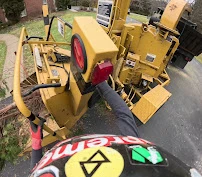
Our crew on homeowner projects a few miles from the shop. Nothing bought from a stock library.
Big yards, mature canopy, one way in
North of the city the projects get bigger and so do the trees around them. Out in Wexford, half-acre and acre lots carry mature oak and hickory that were left standing when the subdivision went in, which is why a detached garage or a pool there almost always means one removal plus real access pruning down a long driveway. Franklin Park is the same story with steeper ground, and a sloped backyard changes the answer about where a machine can safely travel more than the tree count does. West toward North Fayette Township the newer developments have narrower side yards between houses, so the pinch point is usually clearance rather than canopy, and the fix is a few limbs rather than a takedown.
Local ground matters too. Allegheny County clay holds water into May, and a spring project that runs machines across saturated soil compacts a root zone twice as fast as the same traffic in August. If your schedule is flexible and your keeper trees are close to the work, we’ll say so.
One more local thing worth knowing: many boroughs and townships around here want a permit before you touch a street tree or work in the right of way, even for clearance pruning on your own frontage. We’ll tell you during the walk whether your access route runs into that, so it gets sorted weeks before it can hold up a delivery.
Project prep questions
What homeowners ask standing in the yard with a set of plans in hand.
How early should I call, relative to my build date?
Three to four weeks ahead is comfortable. That leaves room to walk the plan, get you the number, book a day, and still handle a permit if your access route touches a street tree. If your excavator is booked for next Tuesday, call anyway. We move projects up when a schedule is real, and being honest about whether we can hit your date takes about one phone call.
Can you tell me which trees have to go if I only have a rough sketch?
Yes. Bring whatever you have, even dimensions written on an envelope. We pace or stake the corners in the yard so you can stand there and see the outline. Most people change their mind about something once they see it at full size, and that’s a much better time to change it than after the concrete is ordered.
What is root zone protection fencing and do I really need it?
It’s temporary fence set at the drip line of trees you’re keeping, so machines and material stay off the soil the roots live in. You need it any time a mature tree is close to the work. Compaction kills trees quietly, two or three years later, and by then nobody blames the project. An hour of fencing is the cheapest insurance on the whole job.
Do you handle the excavating and grading too?
No, and we’d rather be straight about that. We’re a tree outfit. We clear the footprint, clear the access, grub the stumps out of the dig, and haul everything off. Your excavator handles the cut, the fill, and the grade. That handoff is clean when the tree work is finished first, which is exactly why we push to be on before he is.
Can my excavator just push the trees over while he’s here?
He can. It usually costs more and leaves a mess. Pushing a tree over pulls the root plate and leaves a crater to fill, the whole tree lands on the site with nobody equipped to chip it, and disposal becomes a line on your invoice. Our way, the wood leaves on our truck and he arrives to open ground.
What does site prep tree work run for an addition or a garage?
It comes down to tree count and size, how tight the access is, and how much has to come out of the ground versus just get cut. That is why we don’t guess it over the phone. Chris walks the property with your plan and hands you an up-front number in writing, and it’s the same figure on work day. Set up a visit and you’ll usually have it within a day or two.
Get the trees handled before the concrete is ordered
One walk with your plan, one written price, one crew day, and your builder starts on open ground instead of working around a maple. One and done. In sawdust we trust.