
When it just has to go
Bush removal, roots and all, bed put back right
Some shrubs are past saving and everybody involved knows it. The yew hedge that hides the whole front of the house. The juniper mass nobody has been able to walk through since the nineties. The burning bush now seeding into the woods behind you. We take the plant out, deal with the root ball, and leave the bed looking like something you would plant into tomorrow.
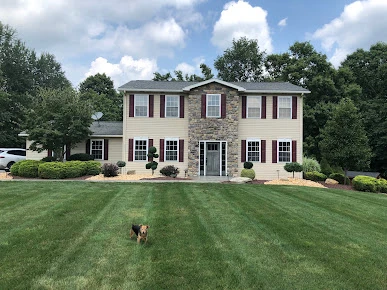
The shrub that has outlived its job
Foundation plantings around here were installed the year the house was finished, which for a lot of Pittsburgh neighborhoods means somewhere between 1955 and 1975. They were chosen at nursery size, planted eighteen inches off the wall, and nobody at the time was thinking about what a yew does after four decades. Now that yew is a woody thing with an actual trunk, taller than the porch roof, and the front of the house has not been visible from the street in years.
That is the honest reason most people call about this. Not disease, not damage. The plant simply won at a game nobody was playing. And once a shrub crosses that line, cutting it back harder every spring becomes a chore that never ends, which is why we would rather talk about taking it out than about renovating it for the fourth time.
The other category is plants that were a mistake from the start. Burning bush and privet are the two we pull most often, because both escape. A burning bush along a fence line drops seed that birds carry into every wooded lot in the neighborhood, and privet does the same thing while also suckering along its own roots until a single shrub becomes a thicket. Homeowners on the wooded edges of Allegheny County notice this when the back half of their property stops being woods and starts being one plant. Taking the parent shrub out of the bed is the part you can actually control.
Then there are removals with no plant problem at all. Chris does a run of these every spring for people getting ready to list. Clearing away overgrown foundation shrubs is about the cheapest visible change you can make to a house before photos, because it hands back the front elevation, the windows, and the daylight in the front room all at once. Nothing else you can do to a yard in one morning shows up that clearly in a listing photo.
Cut flush and grind, or dig the whole root ball
There are two ways to end a shrub, and which one you want depends entirely on what happens in that spot next.
Cutting flush and grinding is the faster route. The top comes off at the soil line, then a grinder chews the crown and the main roots down below grade. What you get back is a hole full of shredded root and wood chips mixed with soil. It is quick, it works even where roots have run under a walk or up against a wall, and it is the right call when you are widening a bed, laying sod, or putting mulch back over the spot. What it is not good for is planting the same day, because that ground stays full of decomposing wood for a while and wood in soil ties up nitrogen while it breaks down. If a new shrub is going in the same hole, we scoop the grindings out and bring in soil.
Digging the root ball whole is slower and cleaner in the ground. We cut a circle around the plant, work under it, and lift the whole mass out on a tarp or with the machine. That leaves an open hole with real soil walls that you can amend, backfill, and plant into immediately. It is the right approach for anybody replanting the bed this season and the wrong approach when the roots have grown into a foundation footer, a gas line, or a retaining wall, because at that point pulling is more damage than grinding. Chris decides which method fits during the walk-around and tells you the reason, not just the plan.
Multi-stem shrubs deserve their own warning, because they are consistently the hardest thing in the bed. A three-foot burning bush looks like a weekend chore and fights like something four times its size. Everything that looks like a separate stem above ground shares one flattened, plate-shaped crown below it, spreading wide instead of deep, hooked into the soil in every direction. Old lilacs and forsythia do the same trick and add suckers. That is why a homeowner with a shovel gets forty minutes into a small burning bush and quits, and why the machine earns its keep on plants that look too small to need it.
What shows up for shrub work
Saws for the woody stems, a stump grinder sized for beds instead of driveways, digging tools, tarps to keep soil off your walks, and a machine only where a machine can reach without wrecking turf.
Insured, military discount. Twenty five years of Chris reading roots, and an up-front number in writing before anything comes out.
Related: shrub trimming when the plant is worth saving, stump grinding for tree stumps, and finished beds in the gallery.
“Triple T came and fell a broken pine tree in my front yard. They were in and out in about an hour and left my yard looking better than ever.”
A Google reviewerWhat roots against your foundation actually do
Half of what people believe about shrub roots and basements is folklore. The real risks are smaller, and they are still worth fixing.
The myth
A yew or a juniper is not going to crack your foundation. Shrub roots are thin, opportunistic, and weak compared to a poured wall or a stone footer. They follow water and air pockets that already exist. If a basement wall has a crack, the roots found it after the fact, they did not create it.
Scale matters here. A mature silver maple twelve feet off the house is a genuine structural conversation and belongs on the tree removal side. A forty-year-old boxwood is not in that category no matter how thick its trunk has gotten.
The real problem
Moisture and contact. A shrub packed against the wall keeps that surface wet for days after rain, which is hard on mortar joints in the older brick homes and slowly gets behind vinyl on the newer ones. Dense growth against the wall also hides the sill from anybody who would notice a problem, and gives insects a covered bridge to the house.
Then there is grade. Shrubs planted in a raised bed against the foundation build up soil over years until it sits above the sill, which is a water problem the plant is only partly responsible for. When we pull that planting, we tell you what the grade underneath is doing. Ask about it during the walk-around.
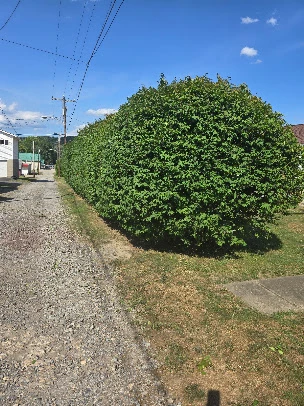

Left: a planting line taken back off the drive. Right: what a ground crown looks like before the chips come out and soil goes in, which is the step that decides whether you can plant there this year.
Putting the bed back so it does not look like a crime scene
The removal is the easy half. What people actually judge is the ten square feet where the plant used to be, and a bad finish on that patch undoes the whole job. So the hole gets filled with soil rather than left as a crater that collects water. Bed edging gets lifted before we work near it and set back the way we found it. Mulch gets pulled aside first and raked back after, and where we need more, we match what is already down instead of dropping a fresh black stripe in the middle of an aged brown bed. Neighboring plants get their roots left alone, which sometimes means grinding instead of pulling on the one nearest a rhododendron you want to keep.
Replanting is worth a conversation while the bed is open. Nearly every overgrown foundation planting in this region started as the right plant put in the wrong spot at the wrong spacing, three feet apart because that is how they looked at nursery size. The fix is knowing the mature width and giving it that room now. Along the tighter streets in Swissvale, where beds run narrow between porch and sidewalk, that usually means fewer plants than people expect. The older lots in Edgewood carry deep original beds with fifty-year yews in them, so removals there are as much about the root plates as the tops. Properties around Forest Hills back onto wooded edges, which is where the invasive-spreader removals cluster.
Our clay soil affects all of it. Water sits in a fresh hole here longer than it would in sandy ground, so a crater left behind a pulled shrub turns into a puddle by the next storm and then a mosquito nursery by July. Filling and grading right is a drainage matter before it is a cosmetic one. If a whole planting line is coming out and you want the area cleared and graded properly, that scope crosses over into land clearing, and we would rather scope it that way from the start than surprise you halfway through.
Removal questions
What gets asked while standing over a shrub that has already been decided against.
Will the bush grow back after you take it out?
Not if it is done right. A shrub cut at the ground and left alone will resprout from the crown, especially privet, lilac, and burning bush. That is why the crown gets ground below grade or dug out entirely. On aggressive suckering plants we also chase the runners we can reach in the bed, because a privet root fragment two feet away is a new shrub next spring.
Can I plant something new in the same spot?
Yes, and the method we use should match that plan. Say so before we start. If you are replanting this season we dig the root ball whole and leave you an open hole with clean soil walls. If we grind instead, we scoop the chips out and bring in soil, because ground wood mixed into the backfill will starve a new plant of nitrogen while it breaks down.
Why is a small burning bush so hard to pull out?
Because it is wider underground than above it. Multi-stem shrubs spread a flat plate of roots sideways instead of driving one taproot down, so a three-foot plant can be anchored across a four-foot circle in every direction. Add clay soil packed around it for twenty years and hand digging turns into an afternoon. That plant size fools people constantly.
Do the roots along my foundation need to come out too?
Usually not, and going after them can do more harm than leaving them. Shrub roots that have run along a footer are thin and will rot in place harmlessly once the top is gone. Digging hard against a wall risks the wall and any waterproofing on it. We take out the crown and the main structure, leave the fine roots, and tell you honestly which is which.
How much of a difference does this make before selling?
More than almost anything else you can do to a yard in one visit. Overgrown foundation plantings hide the front of the house, darken the front rooms, and read as deferred maintenance in a photo. Take them out, fill and mulch the beds, and the same house photographs like a different property. Agents around here ask for this work by name in the weeks before listing.
What does bush removal cost in Pittsburgh?
It comes down to how many plants, how big and how old they are, whether we grind or dig, and whether a machine can get to the bed. Chris walks it, tells you which method he would use and why, and hands you an up-front number in writing. Set up a walk-through and you will have that figure in a day or two.
Get the front of your house back
One visit takes the plant out, deals with the root ball the way your plans for that bed call for, and leaves the mulch looking untouched. One and done, in sawdust we trust.