
Saving comes first
Ben Avon hired us to keep its old trees standing
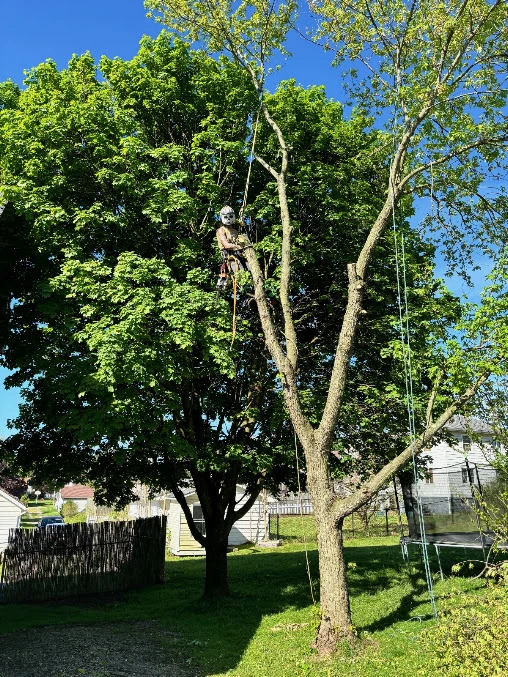
Nobody moves to 15202 for the square footage. They move here for the street: brick sidewalk, a Victorian with a real porch, and a maple over the whole thing that was tall before anybody currently living on the block was born. That canopy is the borough. So when somebody calls Triple T Tree Care about a Ben Avon tree, the first question is never how fast can it come down. It is whether it needs to come down at all.
Preservation pruning, cabling on the old giants that are worth supporting, straight risk reads, and surgical removal when a tree is genuinely finished. Fully insured, one and done, and a number up front before anyone starts a saw.
Chris has 25 years in the trade and no interest in talking anybody into work they do not need. If your oak has another twenty years in it with the right cuts, that is what he will tell you standing in your yard. Military discount applies in Ben Avon the same as everywhere else the truck goes.
What we do in Ben Avon
Every service on the truck runs here weekly. The links go deep on each one.
Removal
Large tree removal · Tree removal · 24/7 emergency response · Storm damage cleanup
Care
Tree pruning · Tree trimming · Cabling · Bracing
Health
Tree health · Disease treatment · Arborist services
Groundwork
Land clearing · Lot clearing · Brush clearing · Forestry mulching · Stump grinding · Stump removal
Commercial
A borough built around its canopy
Ben Avon is roughly a third of a square mile of houses that mostly went up between the 1890s and the 1920s, and the planting went in right along with them. That timing is the whole story. The oaks, maples and lindens shading these streets are not landscape features somebody added later, they are the same age as the porches they hang over, and a lot of them are pushing well past a century. A tree that old is a different animal from a forty year old yard tree. It has healed wounds you cannot see, unions that have been carrying weight for decades, and a root system running under a sidewalk that got poured around it.
So the work here skews heavily toward keeping things alive. Careful reduction and deadwood removal instead of blunt shortening. Cuts at the collar so the tree can actually seal them. Clearing the crown over a slate roof or a third floor dormer without stripping the interior bare and leaving a mess of weak shoots to fix in five years. Good pruning on a heritage tree should be nearly invisible from the sidewalk, and the tree should look like itself the following spring.
Old trees also come with old wounds, and that is where support hardware earns its keep. A big maple with two codominant leaders and a seam of included bark between them is a common Ben Avon shape, and it is exactly the shape that splits in a wet snow. If the tree is otherwise healthy, cabling the leaders together high in the canopy can carry it another couple of decades. Not every candidate qualifies, and Chris will say so if the wood is already too far gone to hold hardware, but plenty of trees people assume are done are actually just under-supported.
The other half of the job here is the ground under the tree. Lots are narrow, and what sits below the drip line is somebody’s perennial bed, a slate walk, an iron fence that has been there since the Coolidge administration, or all three at once. That drives every decision we make about access and rigging. Brush comes down onto tarps, not onto plantings. Heavy sections get roped and lowered rather than dropped. We plan where the chipper parks before the truck ever pulls up, because the alley or the strip of curb by your steps may be the only way in, and rutting a yard on a lot this size is not a small thing.
When removal is genuinely the right call, and sometimes it is, we say it plainly and then do it surgically. A dead ash over a driveway, a trunk hollowed out from an old topping wound, a root plate lifting after a saturated spring. Those come out in controlled pieces on ropes, with the beds boarded over and the fence protected, and the stump ground below grade so the spot can be replanted. Then we clean up like the yard belonged to us. Same crew and same standard we hold across Allegheny County, only here the trees have neighbors watching them.
Being in the river valley matters too. Storms funnel up the Ohio, ice loads sit on brittle old wood, and a Ben Avon block can go from picturesque to blocked in twenty minutes. If a limb is down across your walk or resting on a wire at two in the morning, call. We make the situation safe first, then come back in daylight to look at what else took damage up top, because the worst storm injuries are usually the cracks nobody can see from the ground.
“Chris was wonderful to deal with, beginning to end. He was excellent at communicating what he was going to do.”
Kellie Walker, Google reviewBen Avon questions
What owners here ask before anybody climbs. More of the work is in the gallery.
My tree is over a hundred years old. Can it be saved?
Often, yes. Age by itself is not a death sentence, and around here it is usually the wrong thing to worry about. What matters is the structure and the health of the wood: how the main unions are holding, whether there is decay at the base or in the trunk, how much live crown is left, and what the tree has been through. A heritage oak or maple with sound wood and a fixable structural problem gets a plan to keep it. Chris will walk you through what he sees, in plain terms, and tell you what he would do if the tree stood in his own yard.
Can you work around my garden beds, brick walk and iron fence?
That is the standard Ben Avon job, not the hard version of it. We scout the access before we bring anything in, board or mat over what needs protecting, and stage brush on tarps so nothing gets crushed or ground into a bed. Big pieces get lowered on ropes instead of dropped. Old ironwork and slate walks do not forgive a careless day, so we plan the whole route in before the first cut and work slower where slower is smarter.
What is cabling, and would my old maple be a candidate?
Cabling means installing flexible steel support high in the canopy to tie two heavy leaders together so they share the load in wind and ice instead of prying against each other. The usual candidate is a big healthy tree with a split trunk or a weak union of included bark, which is a very common shape on these streets. It is not a fix for rot. If the wood at the attachment points cannot hold the hardware, we will tell you that rather than sell you a cable that gives false comfort. Details are on the tree cabling page, and a look in person settles it either way.
How do I know you are not just recommending removal to get the bigger job?
Fair question, and the honest answer is you should judge by what we tell you standing in the yard. Plenty of Ben Avon calls end with pruning, or with a cable, or with watching a tree through a season before deciding anything. When a removal really is the call there is usually something you can see for yourself once it gets pointed out: a hollow at the base, mushrooms at the root flare, a heaved root plate, a dead top. We would rather keep a good tree on your street and get the next three calls on the block.
What does tree work cost in Ben Avon?
It depends on the tree, the access, and what sits underneath it, so we do not guess over the phone. Tight borough lots and protected plantings change the approach, and the approach is what drives the number. Send photos or set up a walk-around and you will have an up-front number in writing, usually within a day or two, with nothing added after the fact.
Worried about a Ben Avon tree?
Call or send photos. Chris reads the tree, tells you whether it can be kept, and gives you the number up front. In sawdust we trust.