
Pin to pin
Lot clearing that gets Pittsburgh parcels build-ready
You bought the lot. Now something has to happen to it before a footer, a driveway, or an inspector shows up. Triple T takes a parcel from wooded and forgotten to open, stumped, and swept, cut to your survey pins and nothing past them. Number in writing first, clean ground when we pull out.
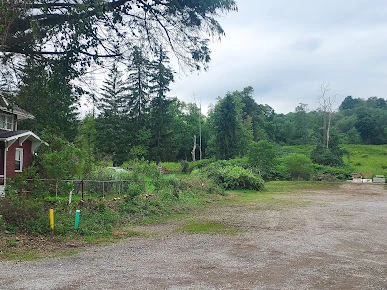
Pittsburgh has more empty parcels than almost anybody
Between the city inventory, the URA side-lot program, sheriff sales, and estates that sat for a decade, there are thousands of vacant parcels scattered through these neighborhoods. Most have been growing unsupervised since the last structure came down. Ailanthus twenty feet tall out of a former basement. Locust and box elder along the alley. A hedge of somebody’s 1970s privet that is now a tree. The deed says buildable. The ground says otherwise.
Our lot clearing work starts there. A builder, a flipper, or a neighbor who finally bought the parcel next door hands us a lot and a set of pins, and we hand it back open enough to stake, dig, and pour. Trees down and hauled. Stumps out of the footprint. Brush and vines gone to the line. Ground left at a condition your excavator can start on instead of curse at.
The other half of the calls are simpler and just as common: somebody got a letter from the city about high weeds and overgrowth on a parcel they own, and the clock on it is short. That job is about getting the lot compliant and keeping it that way, and it usually takes us less than a day. Either version starts the same way, with Chris walking it and writing the number down before anything gets cut.
Twenty-five years in the trade around here means we have seen what these parcels hide. A lot that looks like eight trees from the sidewalk turns out to be eight trees, a collapsed garage slab, and a retaining wall the previous owner built out of railroad ties. None of that is a reason to walk away from a job. It is a reason to look at the whole thing before quoting it, so the number you get on day one is the number you pay on day two.
Cutting to the pins, not to the eye
On an infill lot the property line is the entire job. Thirty feet on either side of you is somebody’s occupied house, somebody’s fence, and usually a tree they care about. Clear six feet past the line and you have created a problem that outlasts the build.
So we work off pins, not guesses. If the corners are findable, we find them and string the line before a saw runs. If they aren’t, we tell you to get a surveyor out first, because that is cheaper than the conversation that follows a removed tree on the wrong side. When the line runs through the middle of a canopy, we cut back to the line and leave the neighbor’s trunk standing, which sometimes looks strange for a season and is still the right call.
The same discipline applies to what stays inside the line. Plenty of parcels have one good tree worth keeping for the finished lot, usually an oak or a hard maple set back from where the house is going. Tell us and we protect it, keep machines off the root zone, and clear everything around it. On a build lot that surviving tree is often the single feature that lets the finished house look like it belongs on the street.
Stumps come out because a slab is coming in
This is where lot clearing separates itself from ordinary tree work. A takedown crew can leave you a parcel full of flush-cut stumps and technically be finished. Then the excavator arrives, catches a two-foot root plate under the footer trench, and now you are paying somebody with an hourly machine to solve a problem that should have been solved on our day.
Anything under the future footprint, the driveway, the walk, or the utility trench comes out. Where the finished plan is lawn or planting bed, grinding below grade is usually enough and costs less. We ask what the site plan says so we can pick the right one instead of blanket-pulling everything. See stump removal for the deeper version of that work.
Everything we cut leaves. On a residential yard job a homeowner might want the chips spread, but on a build lot chips and slash are just material somebody has to move later. Wood goes on the truck, brush goes through the chipper, and the parcel gets swept so what is left is dirt and daylight.
Why builders keep calling the same crew back
Contractors and flippers do not rehire on price alone. They rehire on whether the lot was actually ready the morning they said it would be, because a crew standing around a parcel that is half cleared costs more than any tree. So the promise we make on a build lot is narrow and we keep it: a date, a written number, and a finished condition described in plain words before anyone signs anything.
It also matters who answers the phone. Chris is on the lot for the walk and reachable while the work runs, so a question about a line tree or a schedule change gets an answer from the person holding the plan, not a voicemail box.
What rolls onto the lot
Grapple loader for pulling trunks and stumps and loading without a second machine, chipper, saws, and climbing gear for anything that has to come down in pieces near a neighbor’s roof.
Fully insured, and a military discount for those who served.
Finished lots and mid-job shots are in the gallery. If your job is acreage or a backyard growing shut rather than a buildable parcel, that is land clearing.
“Absolutely fantastic work, carefully executed, highly recommend.”
John Seifert, Google reviewSplitting the work on a build lot
Builders have enough to track. Your column stays short on purpose.
Your part
Send the address, the parcel number if you have it, and whatever plan or plot drawing exists. Mark the pins or tell us they need finding. Say what stays: a tree, a wall, a curb cut, the utility pole guy wire. Approve the number and give us the window.
If a closing date or a permit clock is driving the schedule, say so on the first call. We build the calendar around real dates, not hopeful ones.
Our part
Walk the parcel with the plan in hand, string the line, and set the drop directions so nothing swings toward an occupied house. Take the trees down, pull or grind the stumps according to what is going on top of them, and chip the brush as we go instead of piling it for later.
Then haul it all out, rake the perimeter where we worked against a neighbor’s grass, and text you photos when the lot is clear. Storm damage on an active site gets its own lane through emergency tree service.

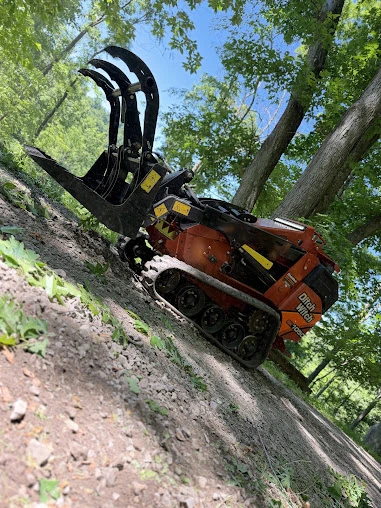
Our lots, our loader, our crew. No stock library.
Row-house math and twenty-five-foot frontages
Clearing a parcel in the river towns is a geometry problem before it is a tree problem. In McKees Rocks a typical vacant lot is narrow, deep, and pinched between two standing houses, so a tree in the back has no drop zone at all and comes down in rigged sections over a strip of ground barely wider than the truck. Wilkinsburg has block after block where a missing house left a gap that filled in with ailanthus and knotweed, and the parcels going back into service there are the ones with the tightest alley access. Down in Braddock, where the side-lot and infill programs have been moving parcels into private hands for years, we are usually clearing next to somebody who has lived on that block since before the lot went empty, so how we treat their fence matters as much as how fast we work.
Steel-town ground has its own habits too. Old fill, buried slab edges, and foundation walls left below grade sit right where a stump wants to come out, which is why we probe before we pull instead of hooking a machine to something we cannot see. Clay holds water, so a wet week turns a narrow lot into ruts if a loader wanders, and we keep machine travel on one defined path from the street back.
Access is the number that moves everything. A corner lot with a curb cut and an alley behind it clears in a fraction of the time a mid-block parcel does when every stick has to come out the front through a gap between two porches. We tell you which one you own during the walk, along with what that means for your schedule.
Lot questions
What builders, flippers, and side-lot buyers ask at the curb.
Can you clear right to the survey line?
Yes, and that is how we prefer to work. If the corner pins are in the ground we find them and string the line before cutting. If they are lost or the line is disputed, get a surveyor out first. We would rather wait a week than take down a tree that turns out to be your neighbor’s, and no clearing crew can fix that after the fact.
I got a code letter about overgrowth. How fast can you get there?
Usually within days, and most compliance clearings are done in a single visit. Send us the letter or read us the deadline on the phone. We clear the growth, haul the debris off so nothing sits at the curb, and photograph the finished lot so you have something to send back to the municipality.
Will stumps be gone where the foundation goes?
Anything under the planned footprint, driveway, walk, or utility trench comes out, root plate included. Where the finished plan is lawn or landscaping, grinding below grade does the job for less. Share the site plan and we will match the method to what is going on top of each stump instead of guessing.
The lot is between two occupied houses. Is that a problem?
It is our normal week. Tight urban parcels get climbed and rigged rather than felled, so pieces come down under control into whatever space exists. We work off the street or the alley, keep the loader on one travel path, and talk to the neighbors before the saws start so nobody is surprised by a truck at seven in the morning.
How long does a lot take, and can you hit my build date?
A standard city parcel is a one-day job. Heavier tree cover, deep stump work, or a lot that has to come out through a single narrow gap runs two. Tell us the date the excavator is booked and we will either commit to being off the lot before it or tell you plainly that we cannot.
What does clearing a lot run?
It comes down to tree count and size, stump work, access, and how much has to be hauled, which is why nobody honest prices it sight unseen. Chris walks the parcel, reads the ground, and hands you an up-front number in writing. Set up a visit and you will usually have it within a day or two.
Turn that parcel into a job site
One walk, one written number, one crew day, and the lot is open, stumped, swept, and ready for whoever digs next. One and done. In sawdust we trust.