
People are home while we work
Apartment tree work with tenants still living there
Nobody moves out for a tree job. The cars stay in the lot, the second shift is asleep at noon, and somebody’s kid is on the playground fifteen feet from where a limb has to land. Triple T runs tree work on occupied Pittsburgh rental properties the way it has to be run: noticed in advance, staged around the parking, and swept clean before the after-work rush comes home.
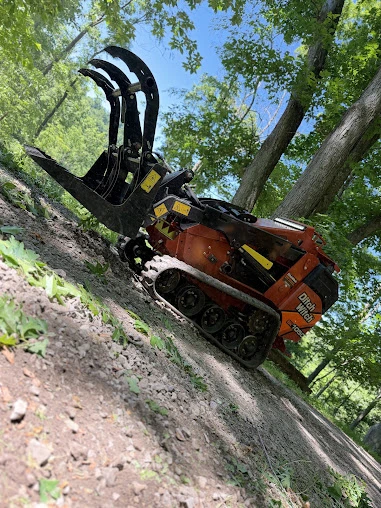
The hard part of an apartment job is the parking lot
At a house, the tree is the problem. At a complex, the tree is maybe the fourth problem. First there are thirty cars in thirty assigned spaces, and the four you need are the four that never move. Then there’s the dumpster corral, which is exactly where the chipper wants to sit. Then the sidewalk that everybody uses to get to the mailboxes. The tree itself is usually the simplest piece of the whole afternoon.
So we plan the lot before we plan the cuts. Notices go on windshields and unit doors two days out, in plain English, with the date, the hours, and where to park instead. We stage cones the night before if the property lets us. On the morning of, the crew walks the row and knocks on the doors of anything still sitting in the drop zone. Nobody gets towed on a Triple T job. Towing a tenant’s car to trim a tree turns a routine maintenance line item into an angry phone call to the leasing office and a one-star review with your property’s name in it.
That’s the whole shape of this work: the tree comes down or gets cleaned up, and nothing else at the property changes. Chris runs it as one visit, one crew, one cleanup, and one number agreed to before anybody starts. Same one-and-done standard we bring to a driveway in Ross Township, sized up for a hundred-unit building.
Hours that respect the people paying rent
A chipper at 7:30 in the morning is legal and it is also how a maintenance super ends up fielding complaints all week. Plenty of apartment tenants around Pittsburgh work hospital shifts, warehouse nights, or airport schedules out toward Moon and Robinson, and they sleep in the middle of the day. We start when the property tells us to start. If the answer is nine, we’re staged at nine. If the answer is Saturday because half the building leaves for the weekend, that works too.
The loud phases also get sequenced. Climbing and hand-cutting produce almost no noise. The chipper and the grinder are the ones people hear, so we cluster that work into a tight window instead of running the machine on and off across six hours. Wood gets stacked and processed in one push near the end. It’s a small scheduling choice that changes how the whole day feels to somebody trying to nap in a first-floor unit.
Balconies, screens, and the limb touching the third floor
Rental buildings sit closer to their trees than houses do. Silver maple limbs rub siding. A locust drops thorny wood onto a second-floor balcony every August. Somebody in 3B has a branch scraping the bedroom window every time the wind comes off the river, and they’ve called the office about it four times. These are small jobs individually and they are exactly the ones that never get scheduled because they’re too small to bother with alone.
We handle them as a sweep. One visit clears the balcony strikes, the window contacts, the walkway overhangs, and the branches growing into the light poles, building by building. Privacy matters here in a way it doesn’t at a single-family home, because a climber in a tree at a complex is at eye level with somebody’s living room. The crew knows to work the far side of the canopy where they can, and to keep the aerial work moving instead of parked outside a window.
The entrance trees get their own attention. Whatever grows at the sign and along the drive is the first thing a prospective tenant sees on a showing, and an overgrown, leggy, half-dead entrance reads as deferred maintenance before anybody walks into the model unit. Cleaning up the frontage is the cheapest curb-appeal work a property can buy.
What the office needs from us
Certificate of insurance on request, and 25 years in the trade behind every call Chris makes on your property.
Written notice text you can post or email to residents, plus photos of the finished work for your file.
Recent jobs live in the gallery. For office parks and retail sites see commercial tree maintenance, and for a limb down at midnight there’s emergency tree service.
“Christopher and his crew arrived on time, worked safely and efficiently, and handled the entire process with real professionalism.”
Felicia Provenzano, Google reviewWho handles what on an occupied property
The maintenance super has enough going on. Here’s the split.
The property’s side
Tell us the trees, or just point at the complaints in the work-order queue. Give us your quiet hours and your preferred day. Approve the notice wording. Let us know which spaces are assigned so we know whose door to knock on.
After the first visit, most properties skip half of this. We already know the lot, the corral, and which building has the maple problem.
Our side
Walk every building and hand over an up-front number in writing. Post the notices 48 hours out. Cone the work zone, keep the fire lane open, and keep a path to the dumpsters and the mailboxes all day. Rope down anything over a car or a balcony instead of dropping it. Chip, haul, blow the lot and the sidewalks, and pull the cones before evening traffic.
Anything that comes down in a storm gets triaged first so the lot reopens fast.

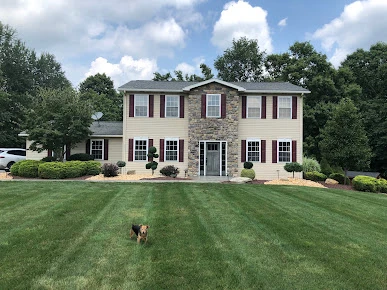
Our crew and our cleanup. The second frame is what a property looks like after we pull out.
Where the rental stock and the old trees overlap
The garden-apartment belt east of the city was built through the sixties and seventies, and the landscaping planted with it is now fifty-plus years old and much bigger than the site plan ever assumed. Complexes along the William Penn corridor in Monroeville have mature pin oaks and Norway maples sitting right on top of the parking rows. Older buildings in Penn Hills tuck into hillsides where a hillside tree leaning toward a lower building is a genuine structural worry, not a cosmetic one. Around Wilkinsburg, a lot of the rental stock is converted large houses with street trees and rear-yard giants that were never on anybody’s maintenance schedule.
Pittsburgh’s freeze-thaw winters and saturated clay springs are hard on trees that were already crowded. Limb failures cluster after the first heavy wet snow and after summer storms roll up the river valleys. A limb through a tenant’s windshield is a claim, a work order, and a review all at once, which is why most of our apartment calls come from managers who’d rather deal with the tree while it’s still standing.
What leasing offices ask
Answers for people who have to explain this to residents.
How do you handle cars parked under the trees?
Notice goes on windshields and unit doors 48 hours ahead with the date, the hours, and where to park instead. We cone the zone early and knock on doors the morning of. If a car still hasn’t moved we work around it or reschedule that section. We don’t tow tenants, and we don’t cut over a vehicle we can’t clear.
Can you avoid early morning noise for shift workers?
Yes. Tell us your quiet window and we’ll start after it. Climbing and hand-cutting are close to silent, so we can be on site working while the loud equipment stays off. The chipper and grinder get grouped into one short block instead of running all day.
Do residents need to be notified, and who writes that?
We’ll write the notice and hand it to you as text you can post, email, or drop in the resident portal. Most offices want their own letterhead on it, which is fine. What matters is that it goes out two days out and names the buildings and the parking rows affected.
What happens if a limb damages a tenant’s car or unit?
We’re fully insured and we’ll send a certificate of insurance to your office before the first job. That’s the point of hiring an insured crew instead of a truck-and-a-saw operation: if something goes wrong, it goes through our carrier, not your property’s policy and not the tenant’s.
Will the playground and walkways stay usable?
We keep the fire lane, the dumpster access, and a path to the mailboxes open the entire day. Play areas inside a drop zone get coned off and are back in service the same afternoon. Everything gets blown clean before we leave, because sawdust and chips on a walkway become somebody’s slip complaint.
Is it cheaper to do all the buildings at once?
Usually, yes. One mobilization across the whole property beats four separate trips, and most managers time it with make-ready season so the trees are handled before turnovers hit. Chris walks every building and gives you one written price for the whole property, broken out by building if your budget needs it that way. Set up a walk-through and you’ll have it in a day or two.
One call, and we already know your property
Get Chris on site once and the tree problems at your complex become a scheduled line item instead of a recurring work order. Insured, written price up front, tenants informed, lot swept. In sawdust we trust.