
Take the ground back
Land clearing that hands your Pittsburgh lot back
Brush to the property line. Vines to the roof of the shed. Scrub maples where the yard used to end. Triple T clears overgrown ground with a grapple loader, a chipper, and a saw crew that knows what to cut and what to leave standing. You get a number before we start and open ground when we finish.

Three summers is all it takes around here
Western Pennsylvania grows back fast. Skip a season of mowing the back acre and the multiflora rose moves in. Skip two and you’ve got buckthorn thickets tall enough to hide a deer. By year three the fence line you paid for is somewhere inside a wall of green, the knotweed has crossed from the neighbor’s side, and Virginia creeper is pulling shingles off the garage. Nobody plans for it. It just happens while you’re busy.
That’s most of what we clear: yards that quietly stopped being yards. Hillside lots in the North Hills are the worst of it, because the slope makes the back third feel like somebody else’s problem until the day you need to get back there. Same story on inherited properties, rental turnovers, and the vacant parcel next door that somebody finally bought.
The work itself is straightforward once the machines show up. Saw crew cuts the standing scrub and small trees. The grapple loader feeds the chipper and moves the piles without dragging half your lawn behind it. Vines get cut at the base and pulled off whatever they’ve climbed. Two to three feet of tangle turns into open ground you can walk, mow, or build on, and we write the number down first so there’s no drift once the saws are running.
Clearing for a build versus clearing to breathe
Two different jobs wearing the same name. If you’re putting up a garage, an addition, a pool, or a pad for a shed, the clearing has to be clean to the stakes and the ground has to be workable for whoever comes next. We cut to the line you mark, pull the root balls that would fight a footer, and leave the site in a condition your excavator won’t complain about.
If you’re just reclaiming a lot for yourself, the goal is different and usually cheaper. You want the scrub gone, the fence line visible, and the good trees still standing. That second part is where most clearing outfits get lazy. A bulldozer flattens everything, including the forty-year oak that was the only reason you liked the back of the property. We work around specimen trees on purpose, clear the junk out from under them, and give them room to actually be trees again.
Tell us which version you’re after during the walk-around and the plan changes accordingly. Most people don’t know which one they want until they see the property with fresh eyes, and that’s fine. Chris will tell you what he’d do if it were his.
What we’re actually cutting out there
Knotweed is the one people name by the time they call. Hollow bamboo-looking canes, eight or nine feet tall, marching along creek bottoms and drainage swales all through Allegheny County. Cutting it is the easy part and the honest answer is that cutting alone doesn’t finish it. The rhizomes stay put and it comes back. What clearing does is give you a stand you can see, walk, and stay on top of instead of a wall you’ve given up on, and that’s usually the difference between a property somebody manages and one that manages itself.
Multiflora rose is the one that decides whether a job is a machine job or a hand job. It grows in arching canes that root wherever the tips touch down, so a single plant becomes a fifteen-foot thicket that a grapple can only half deal with. Buckthorn does the opposite. It grows up into thin trees that shade everything under them and hold their leaves late, which is why a hedgerow that looked thin in April is a green wall in October. Grape and Virginia creeper are the structural problem: enough vine weight in a crown will bend limbs it has no business bending, and creeper under siding or shingles does slow damage most people don’t notice until it’s a repair.
Knowing which one you’ve got changes the cut order, the machine time, and what the ground looks like in a year. That’s the whole reason we walk it before we price it.
What shows up
Grapple loader for moving brush and wood without trenching the yard, a chipper that eats what most crews haul, saws, and hand crew for the vine and thicket work machines can’t finish.
Fully insured, and a military discount for those who served.
Cleared ground and work-in-progress shots live in the gallery. If the job is really about one bad tree, start at tree removal, and see stump grinding for what happens to the leftovers.
“Best tree cutting around! And the clean up was amazing! Thank you Triple T Tree!!!”
Juli, Google reviewWho does what on a clearing job
Split down the middle. Your column is short, and that’s the point.
Your part
Show us the property and say where you want the line. Flag anything that stays: a tree you love, a well head, a septic lid, the neighbor’s post you’d rather not explain. Approve the number. Then stay out of the dust.
If a survey pin or a property line is fuzzy, say so early. We’d rather stop short than clear onto somebody else’s ground.
Our part
Walk the parcel and read what’s actually growing there, because knotweed, buckthorn, and grape vine each get handled differently. Set the cut line, drop the scrub and small trees, feed the chipper, and pull vines off structures by hand where a machine would do damage.
Then the part people remember: we rake, we grade the ruts, and we haul the piles out. Storm-damaged mess gets its own lane through emergency tree service.
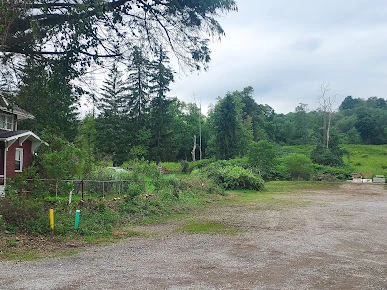
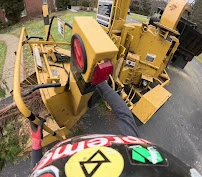
Our machines, our crew, North Hills jobs. No stock library.
Overgrowth is a local sport
Every township up here has its own version of the problem. Deep back lots in Wexford run to woods line, so the scrub creeps forward a few feet a year until the mowed yard is half what it was. Older parcels in Hampton Township tend to be wide with hedgerows that were planted as a boundary and have since become a thicket nobody can see through. And down in Glenshaw, the creek-bottom properties grow knotweed like it’s a crop, which means clearing has to account for what comes back and how fast.
Clay soil and wet springs are the common thread. Roots hold shallow, brush establishes quickly, and anything cut in July is back at your knees by September if the ground gets torn up and left bare. We keep machine travel to defined paths, leave the soil surface as intact as we can, and tell you honestly what a slope is going to do after we clear it so you can decide about seed, straw, or leaving a low buffer along the drainage.
Timing helps more than people expect. Late fall through early spring is the best window for heavy clearing: the leaves are down so you can see what’s actually standing, the ground is firm enough to carry machines without rutting, and nothing is nesting in the thicket. Summer clearing works fine too, it just takes longer to cut through full leaf and the regrowth pushes harder because everything is still in season. If your job isn’t urgent, waiting for a dry stretch after leaf drop gets you a cleaner result for the same work.
One more thing worth saying out loud: clearing is not a permanent state. Anything you open up here wants to close again. If you can mow it, or brush hog it once a year, or keep a defined edge along the woods line, the clearing holds for a long time. If it goes untouched, you’ll be looking at the same thicket in five or six years. We’d rather tell you that during the walk-around than have you find out on your own.
Clearing questions
The ones that come up in the driveway before the first cut.
What’s actually included in land clearing?
Cutting and removing brush, scrub trees, saplings, thickets, and vines across the area you mark. Vines get pulled off fences, sheds, and trees. Piles get chipped or hauled. We rake and grade what the machines disturbed. Big standing trees, stumps below grade, and excavation are separate work we’ll price alongside it if you want them.
Do I need a permit, and what about runoff?
Small residential brush clearing usually doesn’t trigger anything. Larger areas, work near a stream or wetland, or clearing tied to construction can fall under municipal or county rules, and every township up here writes them a little differently. We’re not your permitting office, so call yours before a big job. On the runoff side, we keep bare soil to a minimum on slopes and tell you where seeding or a buffer strip is worth doing.
Can you clear around trees I want to keep?
Yes, and it’s usually the better plan. Mark them, or walk the property with Chris and point. We take out the scrub, vines, and junk growth around a keeper tree, keep machines off the root zone, and leave it standing with room to grow. If a tree you like is already in trouble, pruning may save it, and we’ll say so instead of quietly cutting it.
What happens to all the brush and wood?
Your call. We can chip on site and spread the chips as mulch or leave a pile if you have beds or paths to fill, which costs less because nothing rides away. Or we haul everything off and you’re left with clean ground. Bigger wood can be cut to firewood length and stacked if you burn. Decide before the day and the crew works accordingly.
How long does a lot take?
A typical overgrown residential back yard or fence line is a one-day job. Half an acre of heavy thicket, steep terrain, or a build site cleared to stakes usually runs two days. Access matters more than size. If the loader can reach it, everything moves faster, and you’ll know the schedule before we start.
What does clearing a lot cost?
It comes down to density, acreage, slope, access, and whether the debris stays or goes, which is why guessing over the phone helps nobody. Chris walks the property, reads the growth, and hands you an up-front number in writing. Set up a visit and you’ll usually have it within a day or two.
Get your property line back
One walk-around, one written number, one crew day, and you can see the far end of your own yard again. One and done. In sawdust we trust.