
The house call
Trimming your yard on a rhythm, not in a panic
Most of our residential work is the same handful of homes, every couple of years, before anything has gone wrong. We show up, take the canopy back off the house, tidy what’s grown into the neighbor’s air, clean up, and leave. Do that on a rhythm and your yard never becomes a project. Skip it for a decade and it becomes an expensive one.

Forty-foot lots and trees that belong to three people
A lot of Pittsburgh housing sits on lots forty feet wide. That number does something specific to a mature tree: by year thirty, the canopy is over your roof, your neighbor’s garage, and whatever the family behind you built along the back fence. The trunk is yours. The branches are a conversation.
We have that conversation for a living. Most of the time it’s easy, because the neighbor has been staring at the same limb you have. Chris will knock on the door, explain what’s coming down and when the noise starts, and more often than not that neighbor ends up on the schedule too, which is how half our residential route got built. Where it isn’t easy, the rule is simple and it’s also the law in Pennsylvania: we cut to the property line and no further, unless the other owner tells us otherwise in plain words. Nobody gets a surprise.
The other thing about small lots is that everything valuable in the yard sits directly under the tree. That’s the real difference between a residential trim and the same cuts on a commercial parcel. Out on an open property, a branch can drop where it wants. In a Pittsburgh backyard the drop zone contains a raised bed somebody has been building soil in since 2011, a swing set, a stone patio, an air conditioner condenser, and in more yards than you’d think, a koi pond.
Working over a yard somebody actually uses
So we work small on purpose. Rigging pieces down instead of dropping them takes longer and costs a bit more in labor, and it’s the difference between a clean afternoon and a busted hosta bed. Tarps go over the beds before the first cut. The swing set gets a piece of plywood over it if it’s in range. We stage the chipper on the driveway or the street rather than driving anything across a lawn that just recovered from spring.
Ponds get their own treatment, because a pond is the one thing in the yard where a mistake isn’t fixable by replanting. Netting goes over the surface so sawdust and leaf litter stay out of the filter, and the drop zone moves entirely, even if that means a longer rope run and an extra hour. Say the word “pond” during the walk-around and the plan changes on the spot.
Then there’s the house itself, which is why most people call in the first place. Limbs lying on shingles grind the granules off every time the wind moves. Branches over the gutter fill it every October regardless of what guard you bought. And the branch that scrapes a bedroom window at two in the morning has ended more sleep in this town than any storm. Pulling the canopy back three to six feet from the roof line takes care of the shingles, the gutter, the squirrel bridge into your attic, and the scraping, in one visit. This is close cousin work to our general tree trimming page, which gets into cut technique and clearance around utility drops. This page is about the visit itself.
On the truck for a house call
Pole saws, climbing saddle and rigging for anything over the roof, tarps for beds, netting for water features, and a chipper that stays on the pavement.
Fully insured, and a military discount for those who served.
Browse finished yards in the gallery, or read up on seasonal tree care if you’d rather build the whole year around a schedule.
“Fantastic service! Would highly recommend! Very prompt and professional and did a great job cleaning up.”
Jamie Forrester, Google reviewWhat the second visit gets you
First time out, we’re learning your property. After that, we already know it.
Visit one
Chris walks the whole yard, well past the one tree you called about. Every tree gets read: species, age, where it’s headed, what’s rubbing the house, what’s leaning over a line. You get an up-front number in writing for the work you want now, and a straight answer about what can wait.
Most first visits include something you didn’t know was coming. That’s the point of having somebody look.
Every visit after
Scoping gets faster and cheaper, because the trees are already in our heads and the access questions are answered. Where the truck parks, which gate the chipper fits through, whose fence is soft, where the pond is. Repeat properties often get handled off a couple of photos and a phone call.
Two or three years of light cuts also keep the trees smaller and easier, so the work itself stays in the routine tier instead of climbing toward large removal.
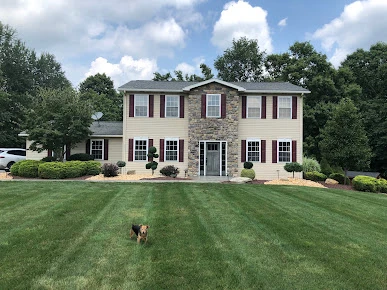
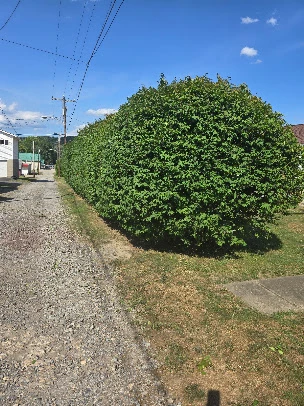
Two repeat customers, both North Hills, both shot the day we finished.
Reading a yard five years out
The most useful thing that happens on a residential visit has nothing to do with the saw. It’s Chris standing in the middle of your yard telling you what it’s going to look like in five years. That silver maple you love is going to put a leader over the garage by 2030. The spruce along the driveway is going to close the sightline before the maple does. The little ornamental by the porch is fine forever and everybody who quotes you for it is padding the ticket.
Twenty five years in the trade is mostly a memory of how these species behave on these lots. Along the river flats in Blawnox, the older maples and sycamores sit close to the houses and grow fast in the damp soil, so the interval runs short. Up the hill in Verona the yards are narrow and stacked, and the neighbor conversation is basically standard procedure. Over in Oakmont the properties are bigger and the trees are older and more deliberate, so the work shifts toward keeping specimen trees shaped and off the roof rather than fighting overgrowth.
Everywhere north and east of the city, the weather sets the clock. Wet springs push soft growth, summer storms load it up and snap the weak stuff, and freeze-thaw winters hang ice on whatever is still reaching over your house. Two or three years is the honest interval for most yards. Get on that rhythm and every visit is short, cheap, and boring, which is exactly what you want from a tree company. One and done, then see you in a couple years.
House-call questions
What homeowners actually ask while we’re standing in the backyard.
Do I need to tell my neighbor before you come?
Helpful, not required. If the work reaches the property line we knock and explain what’s happening before the first cut, and we stop at the line unless your neighbor tells us we can go further. Plenty of times that knock ends with both yards on the same schedule, which saves everybody a mobilization.
Will the crew wreck my garden beds getting to the tree?
Not if we’ve seen them. Tarps go down over beds, plywood over anything fragile, and heavy pieces get roped down instead of dropped. The chipper stays on pavement. Walk us through the yard first and point out what matters, including things that are dormant in the ground and invisible in March.
I have a koi pond right under the tree. Is that a problem?
It’s a plan change, not a problem. We net the surface so sawdust and litter stay out of the filter, move the drop zone off the water entirely, and rig from the far side even when it means a longer rope run. Tell us at the walk-around, not the morning of, and it costs you nothing but a few extra minutes on our end.
How often does a normal Pittsburgh yard need this?
Every two to three years for most homes. Fast growers close to the house and anything over a roof line run on the short end. If it’s been ten years, the first visit is bigger than the ones after it, because we’re catching up on a decade before we settle into the rhythm.
Do I have to be home for the work?
For the first walk-around, yes, because that conversation is where the whole job gets set. On the work day itself, no. Plenty of repeat customers leave a gate unlocked and come home to a clean yard. You’ll get a call when we’re done and photos if you want them.
Is the second visit really cheaper?
Scoping is, reliably. We already know your trees, your access, and where everything sits, so there’s no discovery time and often no second trip out to look. The work itself is usually lighter too, since two or three years of growth is a far smaller job than ten. Set up a walk-around and we’ll put the whole thing in writing before anything starts.
Put your yard on a schedule and forget about it
One walk-around, one written price, one crew visit, then a couple of quiet years before we do it again. In sawdust we trust.