
Planting for 2050
Putting a tree in the ground so nobody has to take it out
Almost every removal we do started as a planting decision somebody made in 1985. We spend our weeks taking out the maples that were set six feet off a foundation and the spruces planted in a row that nobody imagined at full size. That is a strange education, and it is the whole reason we plant.
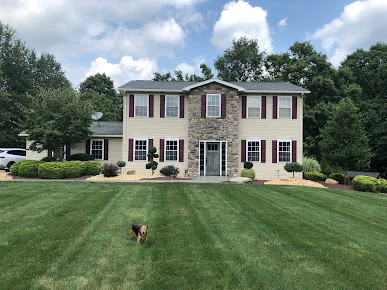
Right tree, right place, learned the expensive way
Most outfits that plant trees have never had to remove one. We have, thousands of times, and it changes what you recommend. When Chris walks a yard to talk about a new tree, he is not picturing the nursery tag photo. He is picturing the crew that shows up in 2061 with a crane, and asking whether that visit can be avoided by moving the hole fifteen feet today.
That is the difference in one sentence. A silver maple set close to a house is a lovely little sapling for about eight years and a foundation problem for the next fifty. A blue spruce planted as a screen looks perfect at ten feet and swallows the driveway at forty. Nobody who planted those trees was careless. They just did not have the picture of the ending, and we do, because we get paid to clean it up.
So the conversation starts with the spot rather than the species. How far to the foundation, the sidewalk, the septic field, the property line. Where the overhead service drop runs. Which way the afternoon sun comes across in July. What the mature spread of the candidate actually measures, not what it measures at purchase. Once the spot has honest dimensions, the shortlist of trees that belong in it is usually pretty short, and picking from it is the easy part.
What survives Pittsburgh clay, and what only pretends to
Our soil is heavy clay over shale, often with construction fill on top and old lime or coal ash mixed in around the older boroughs. It compacts under equipment, it stays soggy in April, and it bakes hard in August. Plenty of species sold at big-box garden centers will sit in that for three seasons looking fine and then quietly give up.
What actually thrives here is mostly what was here first. Oaks are the long game: swamp white and bur handle wet clay better than people expect, red oak grows faster than its reputation, and any of them will still be standing when the house has been resided twice. Hickory is slow and worth it. Blackgum turns a red in October that nothing else matches. Hornbeam and hophornbeam are tough, modest, and almost never planted. For smaller spots, especially under utility lines where anything tall is a future trimming bill, serviceberry, redbud, and native dogwood stay in their lane and flower on the way.
The one we talk people out of is the ornamental pear. Callery pear sells because it flowers early and grows fast, and it fails because those upright branch unions have included bark that splits in the first heavy wet snow. We remove pears that split themselves in half every single spring, and the seedlings from them have colonized half the untended hillsides in Allegheny County. Skip it. There is a better tree for whatever you liked about it.
Planting depth is what kills them, almost every time
If a young tree in this region dies, the odds are overwhelming it was planted too deep. The root flare, the place where the trunk widens out into the roots, belongs at grade where you can see it. Buried four inches down, the trunk sits in constant moisture, the bark stays wet, the tree girdles itself with circling roots, and it dies eight years later of something everyone blames on a bug.
Nurseries make this easy to get wrong. Container stock often has two or three inches of media above the actual flare, and balled trees are frequently sunk in the ball itself. We dig for the flare before the hole depth is decided, and that is why our holes are wide and shallow rather than deep. Two to three times the width of the ball, no deeper than the ball measures from the flare down, sides scuffed so roots do not spiral against a glazed clay wall.
Then there is the mulch volcano, the cone of shredded bark piled a foot up the trunk that has become the standard look on every commercial property in the region. It does everything wrong at once: holds moisture against bark, invites rodents, and encourages roots to grow up into the mulch instead of out into soil. Mulch goes on as a flat ring two to three inches deep, pulled back so the flare stays visible. It should look like a donut, never a cone.
Container or balled and burlapped
Container stock is lighter, plants in any month the ground is workable, and comes with every root it grew, including the circling ones we have to correct at planting.
Balled and burlapped trees come as bigger specimens and settle in faster once established, but the harvest cut most of the root system, so year one demands real watering discipline. Wire baskets and synthetic burlap come off, not just loosened.
We say which one fits your spot and your patience, then handle it either way. Insured, military discount for those who served. Recent work sits in the gallery, and if the tree you want is already growing on the property, ask us about moving it instead.
“Christopher and his crew arrived on time, worked safely and efficiently, and handled the entire process with real professionalism.”
Felicia Provenzano, Google reviewYear one is the whole ballgame
A tree that makes it through twelve months here will likely make it a century. Most of that first year is watering, and most of it is yours.
Your part
Water deep and rare. A long slow soak once a week beats a daily sprinkle every time, because shallow frequent water trains roots to stay at the surface where the August heat finds them. Skip the week it rains hard. Keep going into November, since dry roots go into a Pittsburgh winter in bad shape.
Leave the mulch ring flat and pulled back off the trunk. Do not fertilize a new tree, and keep the string trimmer away from the bark. Trunk damage at the base is the second most common way these die.
Our part
Find the flare, size the hole to it, correct circling roots, strip the basket and burlap, backfill with the soil that came out rather than a bowl of imported compost the roots will refuse to leave. Set the mulch ring, water it in, and show you exactly where the flare is so you can watch it stay visible.
Staking only when the tree genuinely needs it, on an exposed slope or in loose fill, and it comes off within a year. Trees that flex build stronger trunks. We come back for the stakes, and we check the tree while we are there. Long term, tree preservation is the same thinking applied to a tree with a fifty-year head start.


Left: the ending we are aiming a sapling toward. Right: a ground stump, which is where a lot of our plantings start.
Replanting after we took something out
A good share of our planting work happens on ground we cleared ourselves. Somebody loses a big tree, the yard suddenly looks naked, and the instinct is to put the same thing back in the same hole. Sometimes that is right. Often it is repeating the original mistake with a fresh sapling, because the reason that tree had to go was the spot, not the species.
The other half of the conversation is the ground itself. After a grind, the hole fills with wood chips and soil, and chips tie up nitrogen as they break down, so a tree set straight into that backfill starves for a couple of seasons. Better to plant a few feet off the old stump in real soil, or to have the chips pulled and replaced first. If the tree came out from a root disease, the species going back matters even more, and that is worth a look before anything is bought.
We plant across the same territory we work: the older lots in Wexford where mature canopy is the reason people bought the house, the newer developments in Cranberry Township where the topsoil got scraped during construction and the builder’s three landscape trees are already struggling, and the sloped properties in Franklin Park where drainage decides everything about where a hole should go. Different problems, same question: what does this tree look like when it is finished growing, and does the spot still work then?
Spacing is the part everybody underestimates. A red oak wants forty feet of spread. Three of them planted twelve feet apart because they looked sparse on planting day become a competing thicket that has to be thinned in twenty years. Plant them at the distance that looks slightly too far apart today. It is supposed to. Have Chris walk the yard and mark the spots before anything gets bought.
Before you buy the tree
The questions worth asking while the hole is still theoretical.
When is the best time of year to plant around here?
Fall is our first choice. Roots keep growing in warm soil well after the leaves drop, so a tree planted in October gets a head start before its first summer. Early spring is a solid second. Midsummer works if you commit to the watering, which most people underestimate in a July like ours.
Can I plant a shade tree under the power line if I keep it trimmed?
You can, and you will be paying for that decision every few years forever. Anything that matures over about twenty five feet under a service drop becomes a permanent trimming obligation and eventually gets hacked into a V shape by the utility. Put a serviceberry, redbud, or dogwood there and put the oak somewhere with sky above it.
How close to the house is too close?
It depends on the tree’s mature spread, not its size at purchase. Rough rule: half the eventual crown width off the wall, minimum. For a large shade tree that lands around thirty feet. Small ornamentals can sit much closer. The species that cause the trouble around here are the fast soft-wooded ones, and those want serious distance.
Should the new tree be staked?
Usually not. A tree that sways builds trunk taper and holds itself up. We stake when the site is exposed, the soil is loose fill, or the ball is small for the top, and then the stakes come off inside a year. Staking left on for years girdles trunks, and we have removed trees killed by their own support straps.
Can I plant a new tree right where you ground the stump out?
Better to shift a few feet. The grind backfill is mostly wood chips, and as they decompose they pull nitrogen away from the young roots and settle unevenly, which sinks the new tree below grade. If the exact spot matters, we can excavate the chips and bring in real soil first.
What does planting a tree run in Pittsburgh?
It depends on the tree, the size, the access, and whether the ground needs work before anything goes in. Chris looks at the spot, talks through the species, and hands you an up-front number in writing. Set up a visit and you will have the figure in a day or two.
Plant it once, in the right spot
One walk-around settles the species, the spot, and the spacing, and you get a written number before anybody digs. We would rather plant your tree than remove it in 2061. In sawdust we trust.