
Before you call it dead
Tree health checks for Pittsburgh yards
Half the trees people ask us to take down are fine. Some of the ones nobody worries about are two seasons from failing. Chris has been reading trees for 25 years, and a walk around your property will tell you which one you own, what it needs, and whether you have time.
What a tree tells you before it tells your insurance company
A tree in trouble starts talking years before anything falls. The trouble is that the language is quiet. Twig dieback at the very top of a pin oak reads as thin sky to most people, but that top-down pattern is one of the clearest signals in the yard: the tree cannot push water to its highest points anymore, and the reason is almost always down in the roots or the trunk, not up in the branches where you noticed it.
So a health check works from the ground up. We look at the root flare where the trunk should widen out like a foot. If that flare is buried under mulch or fill, if the trunk goes into the soil straight as a telephone pole, something has been slowly strangling it. We look at bark: loose plates, weeping seams, sunken patches, vertical cracks that follow an old wound. We look at where the crown is thin and whether the thinning has a shape to it. Even deadwood is information. Small dead twigs scattered evenly through an old oak are normal shedding. A whole dead limb on one side, with live growth everywhere else, points at something local, usually a root cut or a struck limb.
Then we put it together with the site. Pittsburgh’s clay holds water in spring and bakes hard in August, and most of our neighborhoods sit on soil that was moved by a bulldozer at some point. That history matters more than any single symptom on the tree.
Species tells us what to expect too. Pin oaks around here run yellow between the veins on high-pH soil and decline from the top down over years. Norway maples grow dense and shallow and choke themselves with girdling roots you have to dig at the flare to find. Ash trees in this county have been under borer pressure long enough that a thin, shoot-covered ash is a specific conversation. Old silver maples split at codominant unions long before anything about them looks sick. Knowing the species narrows the list before we even touch the bark.
What you get at the end is not a report full of terms you have to look up. It is Chris standing in your yard telling you which trees are fine, which one he would watch, which one he would prune this year, and which one he would take down before it decides for you. If nothing needs doing, that is the answer you get, and plenty of times it has been.
Mushrooms at the base are not a decoration
The one thing worth learning to spot yourself: shelf fungus or a cluster of mushrooms growing out of the trunk base or the root flare. Fungal fruiting bodies are the visible part of something that has already been eating wood on the inside for a while, and by the time they show up on the outside, the decay column is usually established. It does not automatically mean removal. It does mean the tree needs a real look, especially if it stands over a house, a driveway, a play set, or the road.
Mushrooms out in the lawn twenty feet away are usually nothing, just fungus working on an old buried stump. On the trunk or the root flare, they earn a phone call.
When the problem turns out to be an active infection or an insect pressure that can actually be treated, that is a separate job with separate tools, and it lives on our tree disease treatment page. This page is about finding out.
Most tree care around here is really soil care
Once we know what is wrong, the fix is often below ground. A yard tree lives in the worst version of its natural conditions: compacted soil, no leaf litter, grass competing for every drop of water, and mulch piled against the trunk like a volcano. Fixing that is unglamorous work and it does more for a struggling tree than anything you can spray on it.
That means pulling mulch and soil back off the root flare so the trunk can breathe and dry. It means loosening compaction out where the feeder roots actually are, which is well past the trunk and often out past the edge of the canopy. It means a proper mulch ring, wide and thin, holding moisture through August without touching the bark. On trees worth the investment we will get water and amendments down into the root zone rather than leaving them on the lawn where the grass wins.
What a check covers
Crown density and dieback pattern, bark and trunk condition, visible fungal activity, root flare and soil grade, lean and load over anything below, plus a plain-language rundown of what to do and when.
Fully insured, 25 years in the trade, and a military discount for those who served.
See real Pittsburgh trees before and after in the gallery, or read about arborist services for the bigger consulting side of the work.
“Absolutely a great worker! Professional and knowledgeable about our trees. Quick response time. 10/10 would recommend!!”
Erin Auvil, Google reviewUgly tree or dying tree
These get confused constantly, and the difference decides whether you spend money on pruning or on a removal.
Ugly but fine
Lopsided from reaching around a garage. Scarred bark from an old mower hit that sealed over years ago. A sparse spring after a hard winter, then normal growth by July. Surface roots in a lawn. Leaves that spot up in a wet June and drop early. None of that is fatal, and most of it is fixed with good pruning or simply left alone.
Actually in decline
Dieback that starts at the top and works down. Leaves getting smaller and paler every year. A new crop of shoots erupting straight out of the trunk, which is a stress response. Fungus at the flare. Soil heaving on one side of the base. Two of these together, on a tree that stands over something you care about, is a call worth making this month rather than next spring.

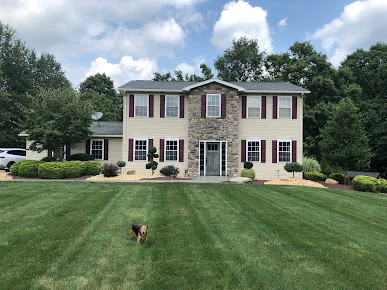
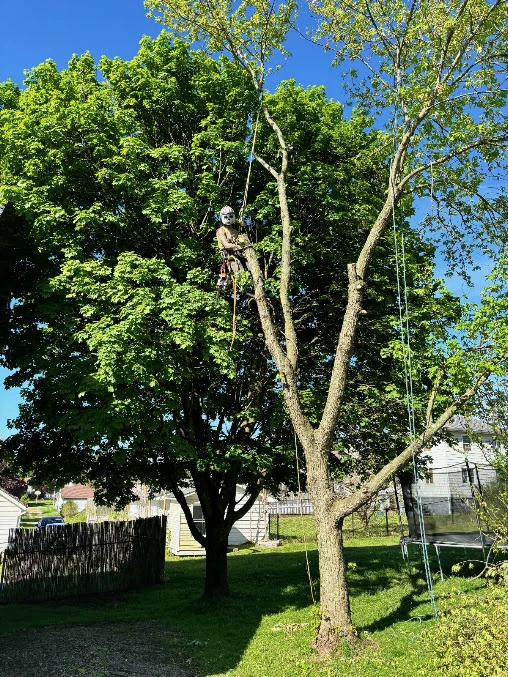
Left: reading limb condition from inside the canopy, which is the only place some problems are visible. Right: a North Hills property where the trees stayed.
Ten-year-old damage and other local habits
The most common cause of decline we find around here has nothing to do with disease. Somebody put in a driveway, an addition, a pool, or a French drain, and a machine cut or compacted roots on one side of a mature tree. The tree looked fine that year and the next four. Then the crown starts thinning on the damaged side and the owner blames a bug. Construction damage runs on a long delay, which is why we always ask what has been dug near a tree in the last decade before we blame anything else.
Neighborhood matters too. The older properties in Fox Chapel carry big legacy oaks and beeches where the whole value of the lot is tied up in the canopy, so catching decline early is worth real money. Newer development in Franklin Park means young trees planted too deep in graded fill, a problem that is fixable in the first few years and permanent after that. Out in Plum, larger lots and old field edges bring ash, wild cherry, and hedgerow trees that were never pruned, which changes what we look for entirely.
Condition is only half of it. The other half is what sits underneath. A hollow tree at the back of two acres can stand there for years and hurt nothing, and we will happily tell you to leave it for the woodpeckers. The same defect on a tree leaning over a bedroom, a driveway where cars park, a play set, or the sidewalk is a different answer entirely, because the cost of being wrong changed. So when we weigh a tree we weigh the target with it, and that is usually what decides between watch it, prune it, and take it down.
Timing follows the seasons. Spring tells you what leafed out and what did not, which is the fastest read on whether last year’s problem got worse. Fall, once the leaves drop, gives you a clean look at structure, deadwood, cracks, and old wounds you cannot see in July. We are happy to swing by in either window, and for trees we are already watching, a look each year costs you nothing but a phone call. Get on the list and we will keep an eye on it.
Straight answers
The questions people ask standing in the yard, pointing up.
Can you tell if a tree is dying from a photo?
Sometimes. A clear photo of the whole tree plus a close shot of the trunk base often tells us enough to say “that needs a visit soon” or “that tree is fine, save your money.” What a photo cannot show is decay inside the trunk, soil condition, or how sound the root plate is, so anything serious still gets a walk-around.
My tree lost a lot of leaves early. Is that bad?
Usually not on its own. Drought stress, a wet spring that brought on leaf spot, or a hot dry August will all make a healthy tree drop early. The question is what happens next spring. If it leafs out full and on schedule, it was weather. If it comes back thin, later, and with smaller leaves, that is a pattern and worth a look.
What does a mushroom growing on the trunk mean?
It means fungus has been feeding on wood inside the tree long enough to fruit on the outside. How much that matters depends on where it is, how much sound wood is left, and what stands underneath. A shelf fungus on a hollow trunk leaning over a driveway is urgent. The same fungus on a stub in the back woods can be watched.
Can a declining tree be saved?
Often, if you catch it while there is still enough live crown to work with. Correcting a buried root flare, relieving compaction, pruning out failed limbs, and easing whatever is stressing the tree can turn things around over a few seasons. A tree that has lost most of its canopy and has decay at the base has generally passed that point, and we will say so rather than sell you years of care that will not work.
How often should mature trees get looked at?
Once a year for big trees over a house, driveway, or play area, and after any major storm. Younger or lower-risk trees are fine every few years. If we have already worked on your property, a quick check is usually something we fold into whatever brings us back out.
What does a tree health visit cost?
Chris walks the property, reads the trees, and gives you an up-front number in writing for whatever work you decide to do. If you send photos first, the read on whether a visit is even needed is free. Set up a visit and you will usually have us out within a few days.
Find out now, not after the storm
One call, one walk-around, and you know whether your tree needs pruning, care, watching, or nothing at all. No pitch, no scare talk, no guessing. In sawdust we trust.