
One day, whole yard
Yard cleanup that ends the whole backlog at once
Winter’s sticks everywhere. The limbs that came down in February that nobody ever dragged anywhere. Saplings coming up through the fence line and a vine halfway across the garage roof. We show up as a tree crew, spend a day, and hand the yard back looking like somebody has been paying attention to it all along.
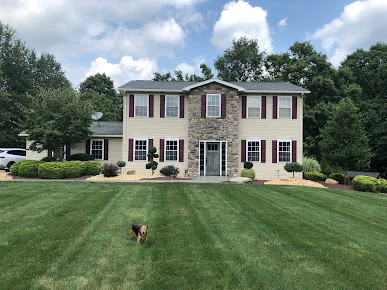
The yard that quietly got away from somebody
Nobody plans this. One rough winter turns into one busy spring, the sticks pile up along the fence, a limb comes down in February and gets rolled to the side of the garage instead of dealt with, and by the time the grass is worth cutting there is more wood in the yard than lawn. Everybody in Pittsburgh knows the feeling of standing on the back porch in April, coffee in hand, doing the math on how many Saturdays it would take.
The honest answer is usually four or five Saturdays, a rented chipper you have to return by five, two trips to a place that may or may not take what you brought, and a back that hurts into June. We do the same yard in a day because the machines already live on our truck and the crew does this every single morning. That is the whole pitch. You are not paying for something you could not do. You are paying to have it done Tuesday instead of Labor Day weekend.
Spring reset, fall close-down, and the catch-up job
Three versions of this show up on our schedule. The spring reset is the most common: everything winter knocked loose, the general grime of five months of freeze and thaw, matted beds packed down under snow that flattened whatever was standing there in October. We pull the wood out, clear the beds of the sticks and leaf mat that got compressed all winter, take down the saplings that got a year older while nobody was looking, and open the yard back up.
The fall close-down is the same job pointed the other direction. Get the deadwood out of the trees before ice loads them, clear the brush piles that built up over the summer, cut back the growth along the fence so it does not spend all winter pushing on the boards. People who do the fall version tend to need a much lighter spring version, and we tell them so.
Then there is the catch-up job, which is the one we like best. Somebody buys a house out of an estate, the yard has been untouched for four, six, ten years, and there is a whole young forest working its way up through what used to be a lawn. That is not a lawn-service problem. That is a tree-crew problem, and it is the most dramatic day of work we do all year.
What a lawn outfit cannot touch, and why we can
A lawn service is built to mow, edge, and blow. Hand them a yard with eight years of maple whips growing through a chain-link fence, English ivy up the garage siding, a pile of hardwood limbs the diameter of your leg, and grapevine wrapped through a lilac, and they will politely tell you it is out of scope. It is. That material needs saws, a chipper, and people who move wood for a living.
Our lane is anything woody. Sticks, limbs, downed wood, brush, volunteer saplings, vines climbing structures and trees, deadwood overhead, and everything that used to be part of a tree. What we do not do is mow, mulch beds, or plant your annuals. We are not going to pretend to be a landscaper, and we are the crew that comes in first anyway. Once the wood is gone, whoever handles your grass can actually get in there and do their job. Half our yard cleanups end with a homeowner calling their mowing guy back after a two year break.
Twenty five years in the trade means the tools are wildly oversized for a yard, which is exactly the point. A crew that spends its winters clearing storm damage off Pittsburgh properties makes short work of a backyard. The chipper that eats twelve inch wood does not notice a season of sticks. The grapple that lifts trunk sections clears a brush pile in three bites.
Ours, not the landscaper’s
Sticks, limbs, downed wood, brush piles, volunteer saplings, fence-line growth, vines on siding and trees, and overhead deadwood. All ours.
Mowing, bed mulching, and planting are somebody else’s trade and we will say so plainly.
Insured, military discount. See finished yards in the gallery, or read up on leaf removal and debris hauling if that is the piece you actually need.
“Triple T came and fell a broken pine tree in my front yard. They were in and out in about an hour and left my yard looking better than ever.”
A Google reviewerWho handles which part of the reset
You point. We carry. That is roughly the whole division of labor.
Your part
Walk the yard with Chris and say what bothers you. The limb by the shed, the saplings in the fence, the corner you have stopped going into. Tell us if anything stays: a woodpile you want kept, a young tree you planted, a bed you are proud of.
Get the up-front number in writing, pick a day, move the cars, and put the dog inside that morning. Nothing else.
Our part
Cut and pull every piece of wood out of the yard, drop the volunteer saplings and grind or cut them flush, strip the vines off the fence, garage, and trees, clear the deadwood overhead so the next storm has less to throw at you, and chip or load everything that came out.
Then the part people remember: we rake, blow the hard surfaces, and leave. Wood that needs a truck instead of a chipper goes out on the haul.

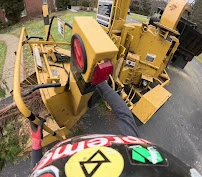
Our crew, our chipper, a real Allegheny County backyard. Nothing borrowed from a stock library.
Small lots, steep banks, and eight years of maple whips
Yards around here fill in fast. A Pittsburgh lot is often narrow, sloped at the back, and bordered by a fence that a neighbor’s tree line has been leaning on since the Obama administration. Skip a couple of seasons and the back third of the property stops being usable. In Braddock Hills the older lots run right up to the hillside, so cleanup usually means working the bank where the volunteers seed themselves. Over in East McKeesport the tight side yards and alley garages are where the vines and the fence-line saplings do their damage. Out in Trafford the properties are bigger, which mostly means the backlog is bigger too.
Clay soil, wet springs, and a long growing season are a great combination for anything you did not plant. Maple, ailanthus, and knotweed will take a neglected corner in three years flat. Ivy and grapevine climb siding, gutters, and anything with bark. None of it is hard to remove while it is young. All of it turns into real work once it has been ignored, which is why the catch-up visit is worth doing once and then never letting it get that far again.
Before the crew shows up
The questions people ask on the walk-around, answered the way Chris answers them.
Is my yard really a one-day job?
Most are. A normal spring reset on a city lot, even a badly backed-up one, is a crew for a day. Yards that have gone untouched for years, or properties with a full acre of overgrowth, sometimes run two. We tell you which one yours is on the walk-around rather than discovering it at four in the afternoon and asking to come back.
Do you mow, mulch, or plant anything?
No. Grass, beds, and plantings belong to a landscaper and we are not going to fake it. We handle everything woody: sticks, limbs, brush, saplings, vines, and deadwood. Plenty of homeowners have us clear the yard first and then bring their lawn guy back in, because now there is actually something to mow.
The party is Saturday. Can you get here first?
Graduation, wedding, family reunion, house going on the market. We get that call constantly and we schedule around real deadlines when the calendar allows it. Tell us the date on the first phone call instead of at the end, because that is the detail that decides whether we can help you.
What happens to everything you pull out?
Brush and limbs go through the chipper on site. Bigger wood gets loaded and hauled. If you burn or heat with wood, tell us and we will stack the good rounds where you want them instead of taking them. Nothing gets pushed into a corner of your property and called finished.
I bought a house and the yard has been ignored for years. Too far gone?
That is our favorite version of this job, and no. Saplings through fences, vines up the garage, a decade of downed limbs, whole beds swallowed by growth: it all comes out. It usually takes a longer day than a routine cleanup, and the difference between the morning photo and the afternoon one is the reason we keep taking them.
What does a full yard cleanup run?
Depends entirely on how much wood is out there and how hard it is to reach, which is why nobody should quote it sight unseen. Chris walks the property, counts the real work, and gives you an up-front number in writing before anybody commits. Set up a walk-around and you will have it in a day or two.
Get the yard back in one day
One walk-around, one written price, one crew, one day. You come home to a yard you can actually use, and nobody has to spend another summer weekend dragging sticks. One and done. In sawdust we trust.