
Overgrown back acres
The old pasture is still back there. Let’s find it.
Plenty of Hampton back corners were hayfield or grazing ground not that long ago, and they have been filling in ever since. Multiflora rose knits the ground together, black locust shoots up through it, and grapevine climbs whatever stands tallest and pulls it down. Opening it back up starts with deciding what deserves to stay. After that it is a compact loader, a chipper, and a crew that leaves you ground you can actually use.
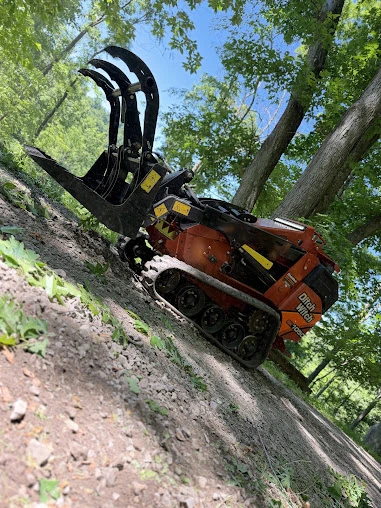
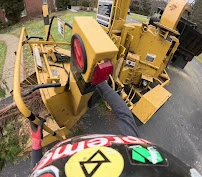
Tracks and a grapple on ground that tilts
The machine doing most of the work on these jobs is a compact track loader with a root grapple on the front. Tracks spread the machine’s weight across far more ground than tires do, and that matters on a hillside lot, where a wheeled machine spins, digs in and leaves a trench for the next rain to run down. The grapple lets the operator pick up a whole tangle of rose cane and locust, roots included, instead of shoving it across the ground and peeling the topsoil off with it.
The machine handles grades a person would rather not stand on, but not wet clay at the top of a ravine; that edge gets done by hand. When the ground is soaked, we would rather come back once it dries than rut a hillside that will wash all summer. Chris makes that call standing on the ground, and he will tell you why he made it.
Finished clearing jobs sit alongside the removals in the gallery.
Flag the keepers before anything with an engine moves
The first part of every clearing job is a walk, and nothing is running yet. Under the rose and the vines there is usually more worth saving than you can see from the back porch. A decent oak or two that grew up along an old fence line is common, sometimes a hickory with it. We find them, look them over for deadwood and damage, and tie tape around every one that stays, so nobody has to remember in the middle of the job which trunk was the good one.
Then we talk about what you want the ground to turn into. Lawn you mow every week, a rough patch you cut once a year, a garden, a spot for the kids, a view down the hill. That answer decides how far we go and how clean we leave it.
Ground that used to be pasture can also hide old fence wire, sometimes grown straight into a trunk. Finding it on the walk beats finding it with a saw chain or the chipper, so every old fence line gets looked over before anything is cut along it.
Black locust sprouts back hard from cut stumps and from its roots, so where you want lawn, the grapple pulls those roots out instead of us cutting at ground level and walking away. Grapevine gets cut at the base and dragged out of the crowns of the trees you are keeping, because left hanging up there it keeps choking them even after it dies. Our brush clearing page covers the method in general terms.
Chip it on site or haul it off?
Once the brush is cut, it has to go somewhere. Which way makes sense depends on what you want left behind.
- Chipped where it stood
- The chipper turns rose cane, locust and vine into chips that can be spread right where they came from, along a path or around the base of the trees you kept. Nothing leaves the property, and fewer trucks run up and down your driveway.
- Loaded and hauled away
- Where you want clean soil to seed, or a layer of chips would only smother what you plan to grow, the material gets loaded and taken off the lot. More trips, a cleaner finish.
- Mulched in place
- On a bigger piece where you want the growth knocked down and left as a mat, forestry mulching grinds standing brush where it is. It opens ground in a hurry, but you will not get lawn out of it, so we only suggest it when lawn is not the plan.
- Stumps and roots
- Locust and anything else you want gone for good gets pulled or ground below grade, so the mower deck does not find it next spring.
Leave the top of the ravine bank alone
Where a Hampton lot backs onto Crouse Run or North Fork Pine Creek, the brush along the top of the bank is earning its keep. All those roots, rose and locust included, are holding soil on a slope that would otherwise start creeping toward the water every time it rains. Strip that edge down to bare dirt and the first hard storm cuts gullies into it. By fall you have lost a strip of yard and put mud in the creek.
So on a ravine lot we leave a band along the top of the slope with roots still in the ground. We may cut the vines out of it and take the worst of the rose, but the stumps stay and the soil stays covered. Where the clearing stops, the cut edge gets seeded or mulched instead of left raw. If what you are after is a view down the hill, taking out a handful of stems along that edge opens it up without pulling the bank apart.
Flat ground we will clear as hard as you want.
Clear the flat ground hard. Let the bank keep its roots.
What turns up once the brush comes out
Opening a corner nobody has walked in years tends to turn things up. Ash in a thicket like that is often standing dead, and dead wood that size near where you plan to mow is a dead tree removal job, best done before the mower ever goes back there. The keeper oak you flagged has probably grown lopsided reaching for light, and crown thinning can even it out now that it has room.
An old fencerow tree with two big stems pulling apart might be a fit for tree cabling, or it might need to come down, and Chris will say which. And if what you find back there is a tree some past storm laid over into the brush, that is storm-damaged tree removal, handled on the same visit. For everything else on the truck up here, start at the Hampton Township page.
Hampton Township, from the creek ravines up to the ball fields.
Settled before the loader comes off the trailer
The questions people want answered before anything gets torn out.
Can you save the good trees in an overgrown area?
That is the first thing we do. Before any machine moves, we walk the ground, find the oaks or other trees worth keeping, and mark them. The clearing then works around them, and the vines get pulled out of their crowns so they finally get the light they have been missing.
Will the loader tear up my yard?
Not when the ground is right for it. A track loader spreads its weight and the grapple lifts brush instead of dragging it, so the soil stays where it is. On a wet slope we pick our routes carefully or wait for drier ground, because ruts on a hillside wash out all season.
What happens to all the brush you cut?
Either it goes through the chipper and the chips get spread on site, or it gets loaded and hauled off the property. Chips work well on paths and around the trees you kept. Hauling makes more sense where you want clean soil ready to seed or plant.
How do you keep multiflora rose and locust from coming back?
Cutting them at ground level is not enough, because both sprout again from what is left. Where you want lawn, we pull the roots with the grapple or grind them below grade, and the cleared ground gets seeded so grass claims the space first. Expect a few stragglers; regular mowing finishes them.
Can you clear right down to the creek?
We can, but on most ravine lots we will talk you out of it. The brush along the top of the bank is holding the soil, and stripping it invites gullies and mud in the water. Usually we clear the flat ground fully and leave a rooted strip along the slope, thinned enough to see through.
Will I be able to mow it when you’re done?
That is the goal on most jobs. Stumps and roots in the mowing area come out or get ground below grade, the surface gets smoothed where the machine worked, and bare soil gets seeded or mulched. Where you want meadow or woods instead, we leave it rougher on purpose.
How far back does the overgrowth go?
Stand at the edge of the brush and take one photo straight into it, then one from the house that shows how that corner sits on the lot and whether it runs down toward a ravine. Tell us what you want the ground to be when it is done. Chris will come walk it with you, point out what is worth keeping, and give you an up-front number in writing before any machine comes off the trailer. Send the photos through the contact form, or call.