
Taking Back the Back of the Lot
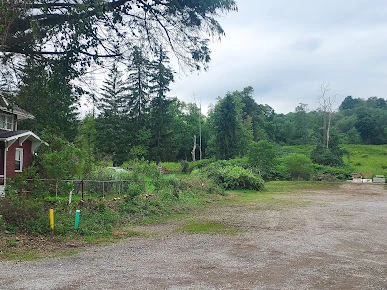
Most of the deep lots in McCandless have a front half that gets mowed every week and a back half that nobody has stood in for years. The tree line used to be over there somewhere. Now it is a wall of saplings, brush and vines that keeps moving toward the house a little every summer.
Getting that ground back is one of the more satisfying jobs we do up here. This post stays on two parts of it that people rarely think about: the walk before any cutting, and the first season after, when the yard and the trees you kept settle into their new shape.
How the back half got away from you
It rarely happens all at once. A strip along the rear property line gets skipped one season because the mower does not fit between two trunks. Seedlings from the big hardwoods come up in that strip. Brush fills in around them, and by the time anyone looks closely, there are trees as thick as your wrist where the grass used to stop.
Woods are always trying to take back what was cleared for the house, and on a lot that was cut out of forest in the first place, they have a head start. Every oak and maple in the tree line drops seed onto open ground, and open ground with sun on it is exactly what a young tree wants.
The result is a yard that feels smaller every year, a shed you cannot reach without long pants, and a fence line you could not find if you tried. None of it is dangerous. It is just ground you are paying taxes on and cannot use.
Finding where the yard used to end
Before deciding where the new edge goes, it helps to find the old one. The yard usually tells you if you know what to look for.
The trees are the best clue. The big hardwoods that came with the woods have thick trunks and high crowns. Everything that crept into the yard is younger, thinner and growing in a loose band in front of them. Where that band starts is usually close to where the mowing stopped.
The ground helps too. Lawn that was mowed for years often leaves a flatter, smoother surface under the brush, while the original woods floor is lumpier, with leaf litter built up over decades. Sometimes you find an old edging stone, a fence post, the corner of a former garden bed or a path somebody wore to a compost pile.
Old photos help more than anything. If you have a picture of the backyard from when you bought the house, bring it out on the walk. It settles questions in a few seconds that would otherwise take guessing.
None of this locks you into the old line. Some people want it back exactly. Some want more yard than they ever had. Knowing where it was just gives everyone a starting point.
Seedlings, saplings and the trees worth keeping
On the walk, the growth back there sorts into three groups, and each one gets a different answer.
Seedlings are the youngest, knee high or shorter, thin enough to pull or cut at the ground. A tree line throws them by the bucketful, and there is no reason to keep any unless you want to grow a specific tree in a specific spot. They come out with the brush.
Saplings are the in-between trees, taller than you and as thick as a broom handle up to your wrist. Most of them are crowding each other and leaning toward whatever light they can find. Every so often one is a straight, healthy young oak or maple in a good place, and that one is worth a conversation. The rest usually go.
The big hardwoods are the trees that were there before the house. A healthy one with a sound trunk and a full crown is almost always worth keeping, and clearing the crowd around it is the best thing that has happened to it in years.
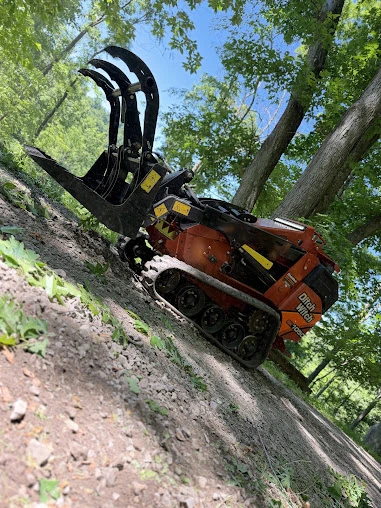
The keepers get marked so nobody on the crew has to guess. Once the walk is done, the cutting, the route the brush takes out past the house, the grapple loader that carries it and the call on which stumps get ground or left in the tree line all follow the plan on the lot clearing page for McCandless.
The first spring after
A freshly cleared area looks finished on the day we leave. The first growing season is when it shows what it is going to become.
Ground that sat under brush for years usually comes back unevenly. Some spots green up fast. Others stay thin, especially where the brush was thickest or where stumps were ground and chips were raked in. Those thin spots are worth seeding again in spring, and they fill in faster when they get watered through the first dry stretch.
Expect some sprouting. Many trees and shrubs send up new shoots from their roots or stumps after they are cut, and the cleared edge of a tree line is where you will see the most of it. Mowing takes care of anything in the lawn. Along the edge, cutting the sprouts back a couple of times in the first year keeps the woods from creeping forward again.
Leaves from the tree line will still blow in every fall. The difference is that now you can rake them.
Watching the keepers fill in
The hardwoods you kept have spent years sharing light with everything that grew up around them. Once the crowd is gone, they respond.
The most obvious change is on the side that faces the new opening. Branches on that side get more light, put on more leaves and start reaching outward. Over the next few seasons the crown tends to fill toward the yard, which is usually what people want from a tree at the edge of their lawn.
Trunks that were shaded by saplings may sprout small shoots along their length once sun hits the bark. That is the tree reacting to light. Most of those shoots die back on their own as the crown fills in, and any that stay can come off during a regular pruning visit.
Keep an eye on the ground under the keepers too. Compacted soil or a new layer of fill near the trunk can stress a tree that was used to soft, leafy woods floor. A ring of mulch out toward the drip line, instead of lawn right up to the bark, gives the roots a better home. If one of the keepers starts to look thin or drops limbs, call and we will come look at it.
Questions about clearing the back of a lot
Do you take out every small tree back there?
No, only the ones you decide should go. On the walk we point out the hardwoods worth keeping and the saplings, brush and vines that are crowding them. Some people want a fully open yard and some want a thinned tree line with a few good trees left standing. Either is fine. The point of walking it first is that the decision belongs to you.
Will the cut stumps in the tree line sprout back?
Some will. Many hardwoods and shrubs send up shoots from a cut stump or from their roots, especially in the first year after clearing. In the lawn, mowing handles it. Along the edge of the tree line, cutting the sprouts back once or twice a season usually wears the stump out. Stumps that get ground below grade do not have that problem.
What should I do with the cleared ground the first summer?
Mostly seed and water. Spots that stay thin after the first spring are worth seeding again, and new grass needs water through any dry stretch. Keep sprouts along the edge cut back so the woods do not creep forward. Leave a mulch ring around the hardwoods you kept instead of running lawn up to their trunks. After that, it is just a yard.
Get the yard back
If the back of your lot has gotten away from you, a walk through it with us is the place to start. Call (412) 526-2028 or reach us through the contact form, and tell us what you want that ground for. You will have an up-front number in writing before any cutting starts. More about our work in McCandless and about lot clearing in general. In sawdust we trust.