
Wood in, chips out
Wood chipping that turns your limbwood into something useful
Somebody dropped a tree and left the wood. Or you want a load of chips for the paths and the beds and you would rather it came off a real tree than a plastic bag. Either way this is the same machine and the same afternoon: limbwood and small logs go in the throat, chips come out the chute, and you decide where the pile lands before we aim it.
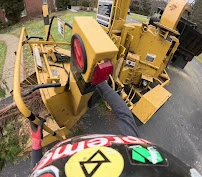
Twelve inches of throat, and what happens to everything bigger
The number people want first is the diameter. Our drum takes wood to about twelve inches through, and twelve inches of green limbwood is a lot more tree than it sounds like standing next to it. A twelve-inch maple limb is heavier than one person wants to lift and it disappears into the machine in about four seconds. So for most of what a removal or a windstorm leaves behind, the honest answer is that it all goes through.
The wood that does not go through is trunk wood, and that is where the saw comes back out. A twenty-inch butt log gets bucked down. Sometimes that means splitting it into feedable pieces, which is slow, dirty work and rarely worth anybody’s money. More often it means the log stays a log, gets loaded whole with the grapple, and rides out on the truck instead of through the chute. We make that call standing over the wood with a tape and we tell you which pieces are chipping and which are hauling, before the first pull cord.
There is a middle category worth knowing about. Crotches and forks are wider than the limbs they came from and they twist in the feed, so a fork that measures ten inches at the branches can behave like a sixteen-inch piece going in. Same with any log that has a bulge, a burl, or a healed-over wound. Chris reads that from the shape of the pile, not from the tape, and it is one more reason we walk the wood before quoting anything.
Some of that wood is firewood, and we will say so
Here is the part most crews skip because it costs them time. Not every log should become chips. If a homeowner has a straight run of red oak, hard maple, black cherry, or hickory in clean rounds, that wood is worth more sitting in a stack than blown into a mulch pile. Oak seasoned two years is the best heat you can put in a stove around here. Cherry burns clean and smells like a good decision. It takes nothing for us to leave those rounds cut to stove length and stacked out of the way while everything else goes through the machine.
The flip side is just as useful to hear. Punky wood, the stuff that leaves a dent when you press a thumbnail into it, chips beautifully and burns terribly. Same for anything that has been laying in wet leaf litter for two seasons, most silver maple, most poplar, and any log with a soft brown center. People stack that wood with real optimism every fall and then spend December fighting a smoky fire. If it is soft, punky, or waterlogged, chip it and be done. If you want a load kept back for the stove, we can point at the pieces worth keeping while we work.
Ash gets its own sentence in this county. The borer left an enormous amount of standing dead ash across the North Hills, and dead ash that came down last year is excellent firewood already dry, while dead ash that has been standing five years is punky through the sapwood and belongs in the chipper. Two logs off the same street can go opposite directions, and the only way to know is to look at the end grain. That is a five-second read after twenty five years of doing it.
What the truck carries
A drum chipper rated for roughly twelve-inch wood, saws for bucking oversize logs down to feed size, and a grapple loader so nobody drags trunk wood across your lawn.
Insured, military discount, and a straight up-front number in writing before any work starts.
See the machines mid-job in the gallery. For a pile of cut limbs and hedge trimmings rather than logs, that is brush chipping. If you would rather keep the good wood for the stove, read about firewood.
“Christopher and his crew arrived on time, worked safely and efficiently, and handled the entire process with real professionalism.”
Felicia Provenzano, Google reviewFresh arborist chips are good stuff, in the right places
Chips off a working tree crew behave differently from the dyed bags at the garden center. Knowing where they shine and where they cause trouble is most of the value.
Where they earn it
Paths through a wooded lot, where irregular texture is the point and it packs down into a surface that stays walkable. Mud control at a gate, a dog run, or the strip beside a shed that never dries out. Sheet mulching a bed you want to convert: cardboard down, four to six inches of chips on top, and the grass underneath gives up by spring without a drop of herbicide.
They also work as a plain ring around established trees, kept a few inches clear of the bark, which is exactly what a tree in a lawn wants and almost never gets.
Where they cause problems
Piled up against a trunk flare. That volcano of mulch you see around every parking-lot tree holds moisture on bark that was built to stay dry, and it rots the collar over a few years. Keep chips off the flare, always.
Also skip fresh hot chips right up against tender new plantings and annual beds. A green pile heats as it breaks down and can cook shallow roots and stems. Let a load sit and cool a few weeks, or use it away from anything delicate. For beds we have just mulched, we spread thinner and stay off the stems.

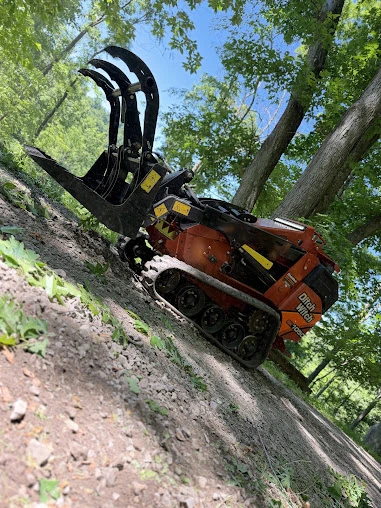
Left, the end grain that decides whether a log gets stacked or chipped. Right, the grapple moving log wood so it never gets dragged across the grass.
A load of chips, and what it really costs you
Gardeners find us for this. Somebody wants six yards of mulch for a hillside bed and does not want to buy sixty bags of dyed hardwood to do it. A truckload of fresh arborist chips covers that ground for a fraction of the effort, and when the truck is already working close by we are usually glad to drop it rather than haul it back. Often free when the truck is already in your neighborhood, which is a real thing worth asking about, though it depends entirely on where we are working that week and what wood is on board.
Be clear-eyed about the differences, because bagged mulch and arborist chips are not the same product. Chips are irregular. There are twigs and leaf bits in there and the pieces run from thumbnail to hand-sized. They are not dyed, so they fade from that fresh tan to a soft gray within a season, and people who want a uniform dark brown border out front are going to be disappointed. What they buy you instead is depth, drainage, weed suppression, and soil that is measurably better in three years. On a back slope, a woodland path, or a bed you are building from scratch, that trade is a bargain.
The other steady call is log-length cleanup after somebody else did the cutting. A crew took the tree down, or a neighbor with a saw did, and now the wood is bucked into rounds in the side yard and nobody dealt with it. That is a straightforward visit for us: chip what will chip, load what will not, and leave you the pieces worth burning if any are. We do this all over the near North Hills. Riverfront lots in Blawnox and Aspinwall tend to have narrow side yards where the wood has to come out past the house, while the bigger properties up in O’Hara Township often have room to keep a chip pile on site permanently, which is the easiest version of this job there is. Tell us which one you have and we will bring the right truck.
Wood and chip questions
What people ask while standing over a pile of rounds, deciding.
How big a log will your chipper actually take?
Roughly twelve inches through, and that covers nearly all limbwood plus most small logs. Anything past that gets bucked with the saw or loaded out whole with the grapple. Forks and crotches feed wider than they measure, so we judge those by shape rather than tape.
Which of my wood is worth keeping for firewood?
Clean rounds of red oak, hard maple, black cherry, hickory, and recently dead ash are worth stacking. Punky wood, poplar, most silver maple, and anything soft in the center should go through the machine because it will smoke and hiss in a stove instead of heating the room. We will point at both piles while we work so you are not guessing in November.
Can I have the chips left on my property?
Yes, and most people do. Tell us where before we aim the chute and the pile lands where you want it. If you want the chips spread rather than dumped, say so during the walk-around so we plan the time for it. Anything you do not keep rides out on the truck the same afternoon.
Are fresh chips safe to put around my plants?
Around established trees and shrubs, yes, kept a few inches back from the trunk flare so bark stays dry. Around tender new plantings, give the chips a few weeks to cool first, because a fresh green pile generates real heat as it breaks down. Never bank them up against a trunk, no matter how tidy it looks.
Another company took the tree down and left the wood. Will you deal with just that?
All the time. The wood is already cut, which makes it a clean visit: we chip what fits, load the oversize rounds, rake the sawdust, and the side yard goes back to being a side yard. You do not have to have been our removal customer for us to clean up after somebody else’s.
How do you price a wood chipping visit?
Volume, log size, and how far the wood has to travel to the machine, which is three things nobody can read over the phone. Chris comes out, looks at the pile, and hands you an up-front number in writing. Set up a visit and you will usually have it inside a day or two.
Wood on the ground, chips where you want them
One call gets Chris out to look at the pile, one visit turns it into chips and stacked stove wood, and the sawdust gets swept before we pull out. In sawdust we trust.