
On the calendar, not on fire
Commercial tree care on a standing schedule
Most properties handle their trees by waiting for something to fall and then finding somebody at nine at night. A maintenance account flips that. We walk your grounds, write down what needs doing and when, and come back on a schedule you approved months ago. Same crew, same phone number, no scrambling.

The difference between a schedule and a phone call
A call-when-it-falls property spends nothing on trees for four years and then spends a fortune in one weekend. Emergency rates, a crew pulled off other work, a lot half closed on a Saturday, and a tenant who watched it happen. Meanwhile the tree that came down had been telling somebody for two seasons that it was going to, if anybody had been looking.
A maintenance account is the other version. Chris walks your grounds, inventories what’s there, and writes a scope that says what gets touched on each visit and roughly when. You approve it once. After that the work shows up when it’s supposed to, in a window that suits your operation, at a number you already budgeted. Nobody calls you about a tree unless we found something that changes the plan.
Twenty five years in the trade around Pittsburgh is mostly twenty five years of watching which trees fail and when. That’s the whole value of the standing scope: we already know your property, so the second visit is faster than the first and the fifth is faster still. Insured, and a certificate of insurance goes to your entity before anybody sets a boot on the property.
What one cycle actually covers
Clearance comes first, because clearance is what generates complaints. Canopy raised off drive lanes so a box truck or a fire lane stays legal. Limbs pulled back off walkways so nobody ducks on the way to their car. Signage and light poles freed up, since a monument sign swallowed by a maple is money you’re spending on a sign nobody reads, and a parking lot light shining into leaves is a dark lot with a working bulb.
Then deadwood, especially anything hanging over parking. Dead limbs don’t wait for a storm. They let go on a still Tuesday, and the only question is what’s underneath. On a cycle, deadwood over cars and walkways gets pulled every visit as a matter of course rather than as an emergency.
Storm check-ins ride along with the contract. When Western Pennsylvania takes a real hit, properties under a standing scope get looked at without anybody having to place a call, and anything hanging gets dealt with before it drops. Bigger failures get triaged the same day. That’s usually the line item that convinces a facility director the arrangement pays for itself, because the alternative is competing for a crew against every other property in Allegheny County on the same morning. The broader capability list lives on the commercial tree services page, and residential-scale HOA and community work follows the same rhythm.
Why the file matters as much as the saw work
Property managers already know this part. When a limb comes down on a car, the first question anybody asks is what you knew and what you did about it. A property with no records looks like a property that never looked. A property with a written scope, dated visit records, and a note about the tree we flagged in March looks like a property under active care, which is a materially different conversation with an adjuster, an owner, or a board.
So everything gets written down. What we found, what we did, what we recommended, and what you decided to defer, with the date on it. If you want photos for the board packet, ask and you’ll have them. None of that is extra paperwork we invented to look thorough. It’s the paper trail that makes documented regular care provable instead of just true.
What’s on the scope sheet
Visit count and season, tree by tree. Clearance heights over drives and walks. Deadwood thresholds. Storm response terms. What’s excluded, so nothing surprises either of us.
COI on request, named to your entity or management company. One invoice per property, or one across a whole portfolio, whichever your accounting side likes better.
Real jobs and real equipment in the gallery, or send us the address and Chris will walk it.
“Christopher and his crew arrived on time, worked safely and efficiently, and handled the entire process with real professionalism.”
Felicia Provenzano, Google reviewBuilding the scope, then running it
The walk-through is the only part that takes your time. Everything after it runs on the calendar.
The walk-through
Chris walks the property with you, or alone with a gate code if your day is full. Every tree gets read: species, condition, deadwood, defects, clearance problems, and what’s sitting underneath it.
Out of that comes a written scope and an up-front number, split into what needs doing this cycle and what can honestly wait a season. Tell us your operating hours and who the COI gets named to, and the schedule gets built around both.
The cycle
Crews arrive in the agreed window, work the scope, haul everything off the property, and blow the lot clean. Each visit closes out complete, which is our one-and-done habit applied to a relationship instead of a single tree.
You get a record of what was done and anything new we spotted. If a storm rolls through between visits, we check in without waiting for your call. Adjust the plan any time your property changes.
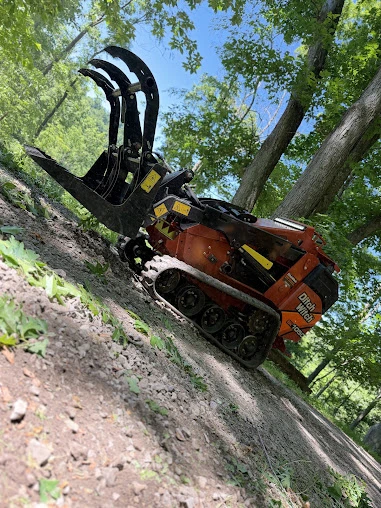
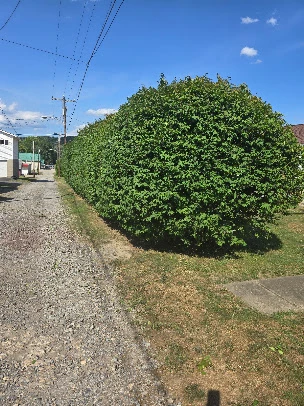
Wood off the ground and clearance restored along a drive. Both from our own Allegheny County work.
Season by season around Western Pennsylvania
Our maintenance calendars follow the local year rather than a generic template. Dormant pruning happens in the cold months, when the leaves are off, the structure is visible, and the trees take cuts best. Spring is inspection season, because that’s when winter’s damage shows and when a loosened root plate in saturated clay becomes obvious. Fall is clearance work, getting weight off drive lanes and walkways before the first heavy wet snow puts a few hundred pounds on every limb.
That rhythm plays out a little differently across the region. The office and industrial parks in Robinson Township run heavy on truck traffic, so clearance over delivery lanes drives their cycle. Properties in Moon Township tend to have older perimeter tree lines along the lot edges, which means deadwood and neighbor-side limbs get the attention. Newer development up in Cranberry Township is full of landscape trees planted close to buildings in the nineties and never pruned since, so the first couple of cycles are catch-up before the schedule settles into routine.
Managing several parcels at once doesn’t change the arrangement. One scope covers the portfolio, one schedule sequences the visits, and one person answers when you call about any of them.
Before you sign anything
What facility directors and property managers ask us about standing accounts.
How many visits a year does a property usually need?
Two is the common answer for a straightforward lot: dormant work in winter and a clearance pass in fall, with a spring look built in. Properties with heavy canopy, tight drive lanes, or a lot of older trees do better on three or four. The walk-through settles it, and we would rather write a lighter schedule that you renew than an inflated one you resent.
Does the schedule lock the price for the year?
The scope you approve carries the figure you approved. Work inside that scope doesn’t move, whatever happens to fuel or a busy season. If something outside the scope comes up, like a tree that fails unexpectedly, you get a separate up-front number before anything happens. No visit ever ends with a surprise on the invoice.
What happens if a storm hits between scheduled visits?
Properties under contract get checked without having to ask, and hangers or partial failures get handled before they finish coming down. Anything major gets triaged the day it happens. You’re ahead of every property calling around that morning, which during a real Western PA storm week is the difference between Tuesday and the following Monday.
Can you work around our tenants and customers?
That’s most of the planning. Retail lots get early mornings before the doors open, office parks get evenings, schools get breaks and weekends, and apartment properties get whatever window puts the fewest resident cars in the way. Lot sections close one at a time so you never lose the whole thing. If you want tenants notified ahead of a visit, we’ll write the notice.
We manage several properties. Is that one agreement or many?
One, if you want it that way. A portfolio scope covers each parcel with its own tree inventory and visit plan, sequenced so our crews move through them efficiently, billed however your accounting side prefers. You still deal with one person for all of it. Chris walks every property himself, so nobody is quoting a site from a spreadsheet.
What if we already have somebody cutting our grass?
Keep them. Landscape crews handle turf and beds, and almost none of them are set up for climbing, rigging, or anything with real weight in it. We work alongside grounds contractors on plenty of properties and stay in our lane. If a coordination question comes up, put us in touch and we’ll sort it out with them directly rather than routing it through you.
Put your trees on a calendar
One walk-through, one written scope, one figure you can budget, and a crew that already knows your property by the second visit. Insured, licensed, and used to working while the doors stay open. In sawdust we trust.