
Setting a Crane on a McCandless Plan Street
The tree is usually the easy part. On a big McCandless removal the harder question is how a crane gets close enough to reach it, on a street that was laid out decades ago and curls into a cul-de-sac two houses past yours.
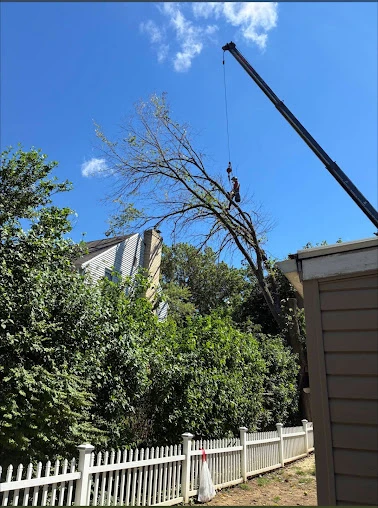
A lot of the large removals up here end up as crane jobs, because the trees grew up as forest and tend to stand at the back of a deep lot. This post stays on the street side of that day: the neighbors, the wire, the weather and the part you play. It is told from your side of the fence.
The neighbor whose curb we borrow
On the tighter cul-de-sacs the best set point for the crane is sometimes in front of the house next door. Other times the only clean reach to a backyard tree runs over the neighbor’s side yard. Either way the plan involves somebody who never called us.
So we ask, and we ask ahead of the day. It is a phone call or a knock: this is where the truck would sit, this is about how long it would be there, this is what it means for your driveway. Plenty of people on an older plan have watched a big tree come down on their street before and are easy about it. Some want to move a car the night before. Some pull up a lawn chair.
If a neighbor says no, that is their answer and the plan changes around it. Sometimes a different set point works with a longer reach, and sometimes the job becomes a climb, which the crane-assisted removal page for McCandless covers along with the rest of the crane work.
What we will not do is roll a crane onto the street and sort out the neighbor once the outriggers are going down. Borrowing a curb for two hours is a small favor when it is asked in advance and a big one when it is sprung on someone.
The wire running from the pole to your house
Most houses on these streets have one: the service drop, the line that runs from the utility pole to a corner of the house. On a plan street it often crosses the front yard right where a crane would like to park, or it runs along the side of the house the boom has to swing past.
Whatever set point gets chosen, the boom, the cable and every load have to stay clear of that line for the whole job. The first pick is the easy one to picture. The angles shift as the tree gets shorter and the picks move lower and farther out, so the line has to stay clear for the last pick as well.
A lot of homeowners have never noticed where their own service drop runs. Stand at the end of the driveway and look up before we come out. If it crosses the yard low, or there is a second line running to a garage or a shed, tell us. A wire you mention on the phone is a wire nobody has to discover on the day.
Why a crane day can get moved
A climbing removal can go ahead in weather that would stop a crane. Wind is the big one. A piece hanging on the cable acts like a sail, and an operator will not swing a heavy section over a roof in gusts. When the forecast turns windy, the crane day moves, and you hear about it as soon as we know.
Soft ground is the other one. After a run of rain, a lawn or a shoulder that would have carried the truck in dry weather can turn into something it sinks into. Plywood helps on turf, but it does not fix a set point that has turned to mud.
That is why we keep the crane day flexible and keep you in the loop. A day that slides is annoying. A crane that settles into a wet lawn next to your neighbor’s driveway is a much bigger problem, for everybody on the street.
If a crane day moves, the neighbor we spoke with hears about the new day as well. They agreed to one morning, and they should not find a truck in front of their house on another one without warning.
Your part of the day
Most of the work belongs to us, but a few things on your side make the morning go smoother.
Get the cars out of the driveway the night before if the driveway is where pieces will land or where the truck will sit. Bring in anything that lives on the deck or the patio and could be in the way of the ground crew, like chairs, planters and the grill. If you have a dog that goes out the back door, plan on keeping it inside or away for the day.
Once the crane is set up, stay out of the yard and well back from the street side of the truck. The safest place to watch is from inside the house or from across the street, where you can see the whole thing without being under anything. Kids love a crane day. Keep them on the far side of the street with you.
If something comes up during the job, catch the ground crew rather than walking toward the tree. Somebody on the ground is always watching the area around the work, and they will stop to talk when it is safe.
When a shady backyard suddenly gets sun
The thing people notice most after a big forest tree comes down is the light. A backyard that sat in shade for decades suddenly gets sun in the middle of the day, and that changes more than the view.
Grass that was thin and patchy under the crown usually starts to fill in once it gets light, though the ground right where the tree stood needs topsoil and seed. Shade plants in the beds, the hostas and ferns that did well under the canopy, may scorch in their first full summer of sun. Some people move them, and some people replant with things that like the new conditions.
Trees that grew up next to the one that came out react as well. A neighbor tree that spent years leaning away from it may start filling toward the gap. Any trunk that was shaded and is suddenly exposed can put out a flush of small shoots along its length.
None of that is a problem. It is just worth knowing before the day, so the change in the yard is something you expected rather than a surprise.
Questions about crane days on a plan street
Do I need to tell my neighbors myself?
You can if you want to, and some people prefer it. Either way we make our own call or knock ahead of the day whenever the truck will sit in front of their house or reach over their yard. It goes better when they hear the plan from the people doing the work, including where the truck parks and when the street will be clear again.
Will the crane damage my driveway?
We plan around it. The set point is picked with the driveway grade and the soil in mind, plywood goes down wherever the ground is soft, and pieces are set down in the landing area rather than dropped. If part of your driveway is already cracked or settling, point it out on the first visit so we can keep the heavy weight off that section.
Why not just climb every tree?
On plenty of trees we do. The crane earns its place when a tree is tall, heavy and far from the street with a house, deck or shed in the way. Then it saves the yard a long string of drag trips and keeps the heaviest wood up in the air instead of on ropes over the roof. When a climb is the better plan, that is what we recommend.
Before the truck turns onto your street
Got a big tree behind the house and no idea whether a crane can reach it? Send one photo from the street and one from the backyard through the contact form, or call (412) 526-2028. We will size up the tree and the approach, and the up-front number comes in writing before anything gets booked. More on our work around McCandless. In sawdust we trust.