
Reducing a Crown Over a Split-Level Roof
A split-level puts part of its roof much closer to the ground than a two-story house does. In McCandless, where so many of those houses were built into existing woods, that low section often sits right under the biggest tree on the lot.
This post walks through one visit to a house like that, from the first look at the shingles to the last gutter blown clean. It is the same job every time in outline, and different every time in the details, which is why the roof gets read before anybody climbs.
What the roof tells you before we arrive
Homeowners usually know the tree is a problem because the low roof has been telling them for years. Learning to read it helps you describe what is going on when you call.
Oak tassels in the gutters. In spring, oaks drop long, stringy flower clusters that mat into gutters like felt. If the gutters on the low roof fill solid every spring while the upper gutters stay mostly clear, the crown is hanging directly over that section.
Moss that never dries. A patch of green on the shingles that is still damp in the afternoon of a dry day means the roof is not getting enough sun or air. Shade from a heavy crown is the usual reason.
Rub marks. Look for shiny, scuffed or worn spots on the shingles, often in a line or an arc. That is where a limb touches the roof when the wind moves it. Gouged shingles or granules piled in the gutter below a branch are the same story, further along.
Take a photo of each before you call. Those three clues tell us which side of the crown needs the work.
The limbs over the low roof come off first
The climber goes up and starts with the wood directly over the shingles, because that is the wood with the most potential to do damage while the rest of the work happens.
Dead limbs come out first. A forest-grown oak or maple almost always carries some deadwood high in the crown that is hard to see from the ground, and anything dead over a roof needs to go before anybody starts moving live branches around.
Next come the limbs that touch or nearly touch the roof. Each one gets shortened back to a healthy side branch pointing away from the house, so the limb keeps growing, just from a point farther from the shingles. The climber works through them one at a time and checks the gap to the roof after every cut.
Only then does the work move to end weight on the long limbs reaching over the house, and to any crossing branches that make the crown dense. On a split-level, the street side and the far side of the tree might get little more than a deadwood pass. The cutting goes where the roof needs it.
That approach is what crown reduction in McCandless looks like on the ground.
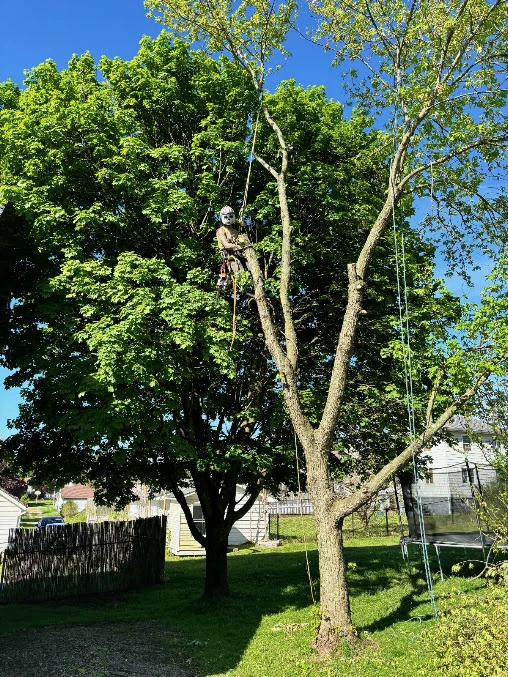
Where the lowering line runs
Most of the wood that comes off over a low roof cannot simply be dropped. A branch falling onto shingles from that height takes shingles with it, and a split’s back yard usually has a deck, a patio or beds right under the roofline.
So the climber sets a lowering line high in the tree, above the work. Each limb over the roof gets tied off before it is cut, and the ground crew lowers it on the rope, swinging it out and away from the house before it reaches the ground.
Where that line runs gets decided before the first cut. Usually the pieces come down on the open side of the tree, away from the roof and onto lawn, and the ground crew keeps the landing area clear. If the only open ground is a patio, it gets covered first.
Small twigs and leaves will land on the roof no matter what. That is expected, and it is what the cleanup at the end of the day is for. The rule is that nothing heavy touches the shingles.
If you have a skylight, a satellite dish or a roof vent on that low section, tell us before the visit so the line is set to keep clear of it.
Gutters blown out at the end
When the last limb is down, the job is not finished until the roof is.
The crew clears whatever twigs and leaves landed on the shingles during the work. Then the gutters on the low roof get blown out, which usually means years of tassels, leaves and grit along with the fresh debris from that day. Downspouts get checked to make sure they run.
On the ground, the brush gets chipped, the wood goes on the truck, and the beds, the deck and the patio get raked or blown clean. Mulch that got kicked around goes back where it came from.
Before we leave, take a walk around with the crew and look up at the roofline. The gap between the shingles and the nearest branches should be obvious from the yard. That gap is the whole point of the visit.
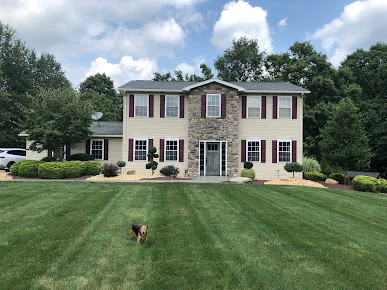
Reading the roof the following spring
The low roof keeps telling the story after the visit, and the first spring afterward is the best time to check.
Look at the gutters during tassel season. You will still get some, but they should fill more slowly than before. Check the moss on a dry afternoon. With more light and air reaching the shingles, it should be drying out instead of staying green and wet. Existing moss does not vanish overnight, and a roofer can clean it once the shade problem is fixed.
Look for new rub marks. There should not be any. If you start seeing fresh scuffs, or the gap you saw from the yard has closed noticeably, the tree has grown back toward the house and it is time for another look.
A big storm that brings down more than twigs is the other reason to call. Otherwise, the roof will let you know when the tree needs attention again, and you now know how to read it.
Questions about crown reduction
Will my tree look chopped after a reduction?
It should not. Each cut goes back to a side branch that takes over as the new tip, so the outline stays natural and the tree keeps its shape. Most neighbors will not notice anything was done unless they saw the crew. If you can point at the tree from the street and see obvious stubs, the reduction was done wrong.
Will this stop my gutters from filling up?
It will help, but the tree is still a tree. Pulling the crown back off the low roof and opening it up lets more light and air in, so the roof dries faster and fewer leaves land directly on it. You will still have some tassels and leaves each year. The difference is how much, and how fast the gutters clog.
Will the moss on my roof go away once the crown is reduced?
It usually stops spreading, because the shingles get more sun and dry out faster. Moss that is already established tends to hang on until it is cleaned off, and that is a job for a roofer rather than a tree crew. The tree work fixes the shade that let it grow. Cleaning the roof after that keeps it from coming back.
Give the roof some room
If a big tree is sitting on your low roof, have us take a look before the next storm season. Call (412) 526-2028 or send a request through the Size Up My Tree form with a photo of the crown over the roof. You will get a plain answer on reduction versus removal and an up-front number in writing. More about crown reduction and our work in McCandless. In sawdust we trust.